
Cassava is the tuberous root of the cassava plant (Manihot esculenta), belonging to the Euphorbiaceae family. Cassava is widely cultivated in tropical regions, including Vietnam. It is a starch-rich root commonly used in food preparation, desserts, and the production of starch-based products.
Characteristic Features
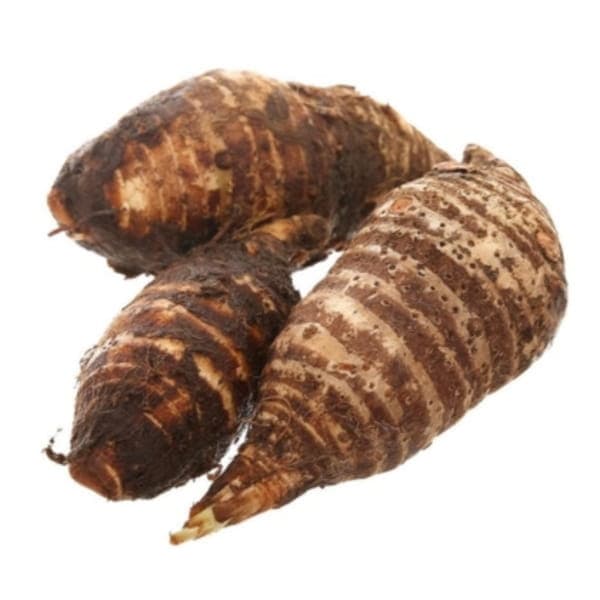
The roots are long, tapered, or cylindrical, with size varying depending on the variety and growing conditions.
The skin ranges from brown and gray-brown to dark brown, with a rough surface, natural ridges, and a relatively thick outer layer.
The flesh is white to off-white, rich in starch, and may contain fine fibrous strands.
Fresh cassava roots are firm, with relatively dry and dense flesh before cooking.
Good-quality roots should be clean and intact, without bruising, excessive softness, decay, or visible mold.
Fresh cassava should be properly peeled, prepared, and thoroughly cooked before consumption.
Flavor & Texture
Cassava has a mild aroma with a slightly nutty and naturally sweet flavor. When boiled, steamed, or otherwise thoroughly cooked, the flesh becomes soft, crumbly, and slightly chewy due to its high starch content. Some varieties may have more fibrous strands depending on growing conditions and maturity.
Uses and Applications
Boiled or steamed for direct consumption after proper preparation and thorough cooking.
Used to prepare steamed or boiled cassava dishes, including preparations with coconut milk and other ingredients.
Used in sweet soups, cakes, and desserts.
Mashed or blended as an ingredient in processed food products.
Used as a raw material for cassava starch and cassava flour.
Can be processed into dried, fried, and other cassava-based food products.
Nutritionally, cassava primarily provides carbohydrates and starch, along with some dietary fiber, vitamin C, and minerals. Fresh cassava should be properly prepared and thoroughly cooked for safe consumption.