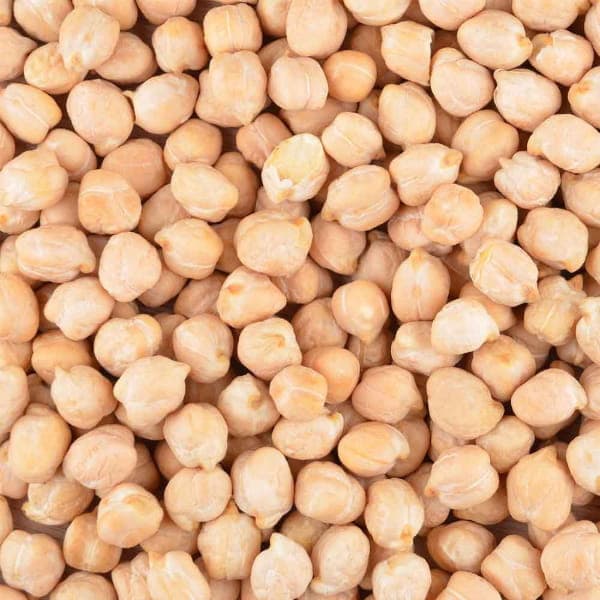
Dried Kabuli (Cicer arietinum) belong to the legume family (Fabaceae). They are harvested when the seeds are fully mature and then dried for long-term storage. The chickpeas are small to medium in size, round, slightly flattened or somewhat angular in shape, with a creamy-white to pale-yellow color and a relatively dry and firm surface. Dried white chickpeas have low moisture content and a hard texture, with a mildly nutty, naturally slightly sweet taste and the characteristic aroma of chickpeas.
Characteristic Features
The chickpeas are round, slightly flattened or somewhat angular in shape, small to medium in size, relatively uniform and creamy-white to pale yellow in color. The surface is dry, clean and firm, without excessive moisture or clumping.
The chickpeas have low moisture content and a hard, firm texture in their dried state. The surface should be free from darkened areas, unusual spots or signs of mold. Good-quality raw material should be relatively intact and free from excessive insect damage, pest infestation, severe breakage or signs of spoilage.
The inner seed is creamy white to pale yellow, with a firm and dry texture. When soaked in water, the chickpeas absorb moisture, increase in size and become softer; after cooking, they can retain their shape relatively well.
The chickpeas should be clean and free from insects, pests or abnormal foreign matter. They should have no musty, sour, fermented, rancid or other abnormal odors.
Flavor & Texture
Dried white chickpeas have a characteristic nutty taste, mild natural sweetness and a light aroma typical of legumes. When dry, the chickpeas are hard and firm; after soaking and cooking, they become soft and moderately creamy, with a smooth interior and a naturally thick texture when mashed.
The chickpeas absorb water well during soaking and gradually soften during cooking. After processing, they have a pronounced nutty flavor and a soft texture while still being able to retain their shape relatively well depending on the cooking time.
Good-quality raw material should not have bitter, sour or burnt flavors or any abnormal taste after soaking and processing.
Uses & Applications
Used as an ingredient in stews, soups, porridge, curries and various chickpea-based dishes.
They can be soaked and boiled for use in salads, mixed dishes and preparations requiring a nutty flavor, soft texture and plant-based protein.
They can be mashed or blended after cooking to create a soft, smooth and creamy mixture for sauces or other chickpea-based preparations.
Nutritionally, chickpeas provide plant-based protein, dietary fiber, complex carbohydrates, folate, iron, magnesium and other minerals; nutritional values may vary depending on the variety and preparation method.