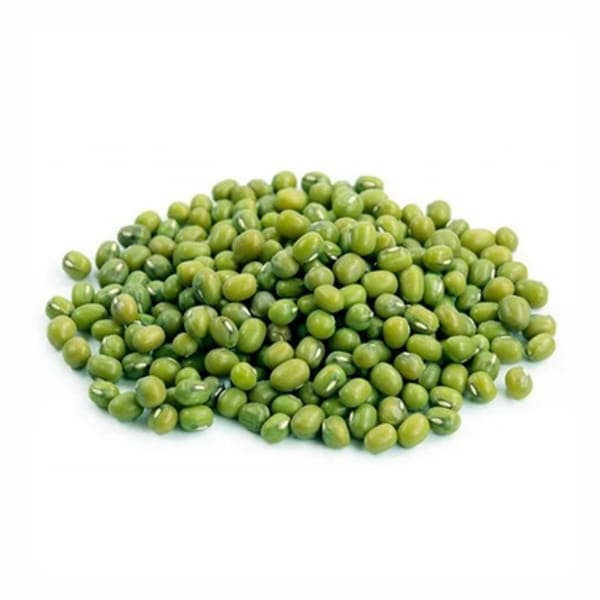
Fresh Mung Beans are harvested from mung bean pods (Vigna radiata) when the seeds have reached a relatively full stage of development but have not yet been dried or dehydrated. The beans are small, round to short oval in shape, with green to light green outer skins and smooth, firm surfaces. Compared with dried mung beans, fresh beans have higher moisture content, a softer texture, and fuller kernels.
Characteristic Features
The beans are small, round to short oval in shape, with relatively rounded ends. Fresh beans have a plump, firm appearance, relatively uniform size, and greater weight compared with their dried counterparts.
The outer skin ranges from green and light green to slightly yellowish green, depending on the variety and maturity. The surface is smooth, taut, and may have a natural sheen. The hilum area is generally lighter in color than the surrounding skin.
The inner kernel is pale yellow to creamy yellow, soft, and naturally moist. Acceptable beans should be fresh, intact, plump, firm, and naturally colored, with no signs of wrinkling, bruising, crushing, sliminess, mold, decay, or abnormal odors.
Flavor & Texture
Fresh mung beans have a mild characteristic bean aroma, with a naturally nutty and slightly sweet flavor. In their fresh state, the beans are soft, moist, and moderately firm. When cooked, they become tender and slightly crumbly, with a smooth interior and a distinctive nutty taste.
Uses & Applications
Fresh mung beans can be boiled or cooked and used in sweet soups, soups, porridge, stews, and various bean-based dishes.
After cooking, the beans can be mashed or blended for cake fillings, desserts, mung bean milk, or combined with grains and other ingredients in food preparation.
Nutritionally, fresh mung beans provide plant-based protein, carbohydrates, dietary fiber, B vitamins, and minerals such as iron, magnesium, potassium, and phosphorus.