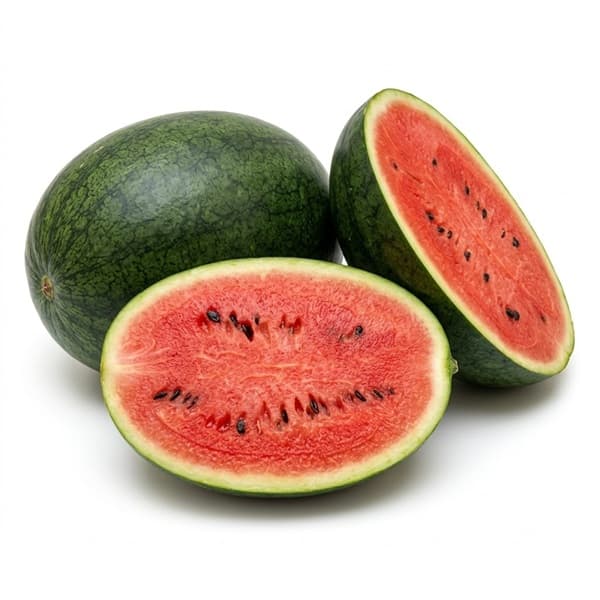

Black Beauty Watermelon is a watermelon variety known for its elongated shape, dark green rind, and bright red flesh. It is cultivated in various watermelon-growing regions of Vietnam, particularly in areas with suitable climate and soil conditions. The fruit is relatively large, with juicy red flesh, a naturally sweet flavor, and is commonly consumed fresh.
Distinctive Characteristics
The fruit is elongated or slightly oval, relatively large in size, and generally well-shaped.
The rind is dark green, relatively smooth and firm, providing protection for the flesh inside.
The flesh ranges from bright red to deep red, with a juicy and relatively firm texture when fully mature.
Seeds range from brownish-black to black, with size and quantity varying depending on the fruit and growing conditions.
Good-quality watermelons are generally firm, with an intact rind and no signs of bruising, cracking, or decay. The flesh should have a natural red color and no signs of excessive softness or fermentation.
Fruit size, flesh color, sweetness, and seed content may vary depending on the variety, growing region, season, and harvest stage.
Flavor & Texture
Black Beauty Watermelon has a naturally sweet, refreshing flavor and high water content. The flesh is juicy, moderately crisp, and relatively firm when properly chilled. At the appropriate stage of maturity, its sweetness and characteristic watermelon aroma become more pronounced.
Uses & Applications
Fresh consumption: served directly after cutting into slices or pieces.
Pre-cut fruit: cut into small pieces or long sticks for convenient consumption.
Juice: pressed fresh or combined with other fruits.
Smoothies: blended with yogurt, other fruits, or additional ingredients.
Fruit salads: combined with melon, pineapple, grapes, apples, and other fruits.
Desserts: used in fruit portions, desserts, or served with ice cream and yogurt.
Food decoration: sliced, cubed, or shaped for decorating dishes and fruit platters.
Preparation: the rind can be removed and the seeds separated before slicing, cutting, or dicing according to the intended application.
Nutritionally, watermelon provides water, carbohydrates, vitamin C, vitamin A, potassium, and naturally occurring plant compounds such as lycopene. Nutritional composition may vary depending on the variety, maturity, growing conditions, and storage conditions.