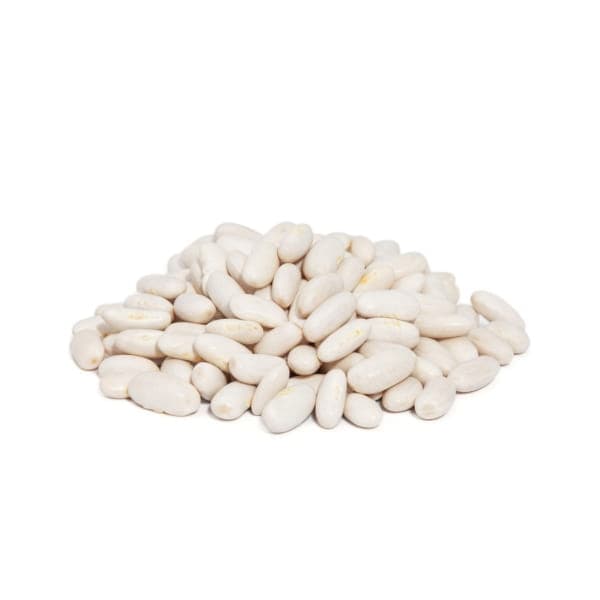
Fresh White Kidney Beans have the scientific name Phaseolus vulgaris and belong to the Fabaceae family. They are kidney bean seeds harvested in a fresh state, after the seeds have developed substantially but before drying. The beans are white to creamy white, oval to characteristically kidney-shaped, with a smooth, plump surface and naturally high moisture content compared with dried kidney beans.
Characteristic Features
The beans are medium-sized, oval to slightly curved or kidney-shaped, with gently tapered ends. They are generally plump, firm, and relatively uniform in size within the same batch.
The seed coat is white, ivory, or creamy white, with a smooth, taut surface and a slight natural sheen due to its moisture content. Some beans may have a small hilum that is off-white to slightly light brown.
The inner seed is white to creamy white, with a soft and moist structure compared with dried beans. Fresh beans should not have the hard and dry characteristics of dried kidney beans.
The raw material is acceptable when the beans are fresh, plump, firm, naturally white in color, and free from shriveling, bruising, sliminess, mold, decay, or abnormal odors.
Flavor & Texture
Fresh White Kidney Beans have a mild characteristic bean aroma, a naturally nutty flavor, and a slightly sweet taste. The beans are soft, moist, and firm when fresh, becoming soft and tender with a mildly rich flavor after cooking.
Uses and Applications
Fresh White Kidney Beans are used in soups, stews, vegetable preparations, and other bean-based dishes. The beans can be boiled or cooked before being combined with other ingredients.
After cooking, the beans can be mashed or blended for use in fillings, purees, sauces, or other processed food products.
Nutritionally, fresh white kidney beans provide plant-based protein, carbohydrates, dietary fiber, folate, and minerals such as iron, magnesium, and potassium.