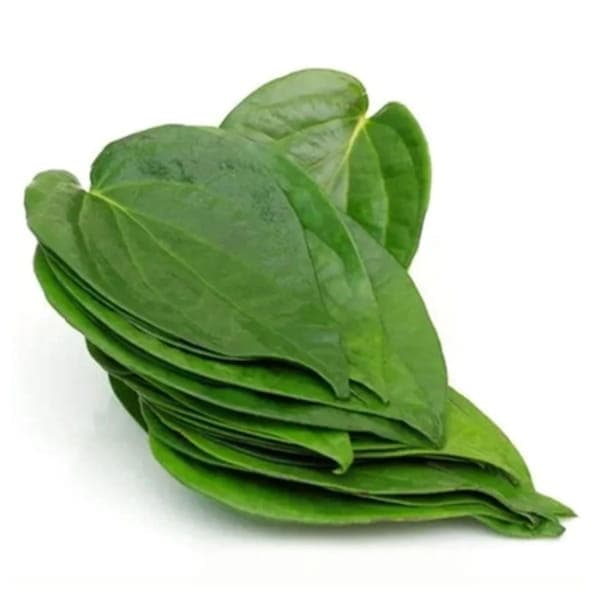
Wild Betel Leaves (Wild Betel Leaves) are the edible leaves of the wild betel plant (Piper lolot), belonging to the Piperaceae family. The plant is native to and widely cultivated in tropical regions of Southeast Asia, particularly in Vietnamese cuisine. The leaves are commonly used as an aromatic herb, fresh accompaniment, and ingredient in traditional dishes.
Characteristic Features
The leaves are heart-shaped to broadly ovate, with pointed tips and smooth margins.
The upper surface is dark green with a slight gloss, while the leaf veins are clearly visible.
The leaf stalks are relatively long, soft, and attached directly to the stems.
Fresh leaves are moderately soft, slightly thick, juicy, and easily bruised if handled improperly.
Fresh, acceptable-quality leaves should have a natural green color, remain intact, and be free from yellowing, pest damage, decay, mold, or abnormal odor.
Flavor & Texture
Wild betel leaves have a distinctive aromatic fragrance, mild spiciness, slight pungency, and a characteristic herbal aftertaste. Fresh leaves are soft, slightly chewy, and juicy; after cooking, the aroma becomes more pronounced and the leaves become softer.
Uses and Applications
Used as wrappers for grilled meat and other fillings.
Used as a key ingredient in Vietnamese-style wild betel leaf rolls.
Stir-fried with beef, pork, or other ingredients.
Added to soups and broth-based dishes.
Finely sliced and used as an aromatic herb or fresh accompaniment.
Used in fried, grilled, and pan-seared preparations.
Used to provide characteristic aroma to traditional dishes.
Used in selected vegetarian and plant-based preparations.
Nutritionally, wild betel leaves provide dietary fiber, vitamin A, vitamin C, calcium, iron, and various naturally occurring aromatic plant compounds.