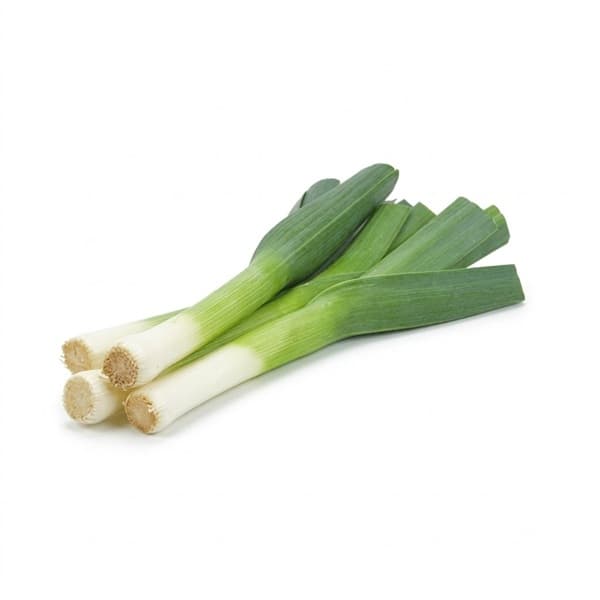
Leek is a vegetable belonging to the Allium genus, which also includes onions and garlic. It originates from the Mediterranean region and Western Asia and is now widely cultivated in temperate and subtropical areas. Leeks have a white to pale green pseudostem, long green leaves, and a slightly enlarged base.
Distinctive Characteristics
- Cylindrical pseudostem with a white base gradually transitioning to light and dark green toward the leaves.
- Long, flat leaves that overlap and wrap around the stem, with a characteristic green color.
- The white portion has a firm, juicy texture, while the green leaves are more fibrous and slightly tougher.
- Size and stem thickness vary depending on the variety, growing conditions, and harvesting stage.
- When fresh, the stems and leaves are naturally firm, with a clean surface and characteristic color.
Flavor & Texture
Leeks have a characteristic onion-like aroma with a mild, slightly spicy flavor that is gentler than raw onions. The white portion has a delicate, slightly sweet and juicy taste, becoming softer, more aromatic, and naturally sweeter when cooked. The green leaves have a firmer texture and are suitable for dishes that require longer cooking.
Uses & Applications
Leeks can be used fresh, sliced, or cut into sections for cooking.
Both the white and green portions can be stir-fried with vegetables, meat, fish, or seafood.
They are commonly used in soups, broths, stews, and other dishes to provide a natural aromatic flavor.
Leeks can be grilled, pan-seared, or cooked whole depending on their size and intended use.
The white portion can be thinly sliced for salads or dishes served fresh.
Leeks can also be combined with onions, garlic, ginger, and other seasonings as an aromatic base for cooking.
Nutritionally, leeks provide dietary fiber, vitamin C, vitamin K, folate, vitamin B6, and minerals such as potassium and manganese. Nutritional composition may vary depending on variety, growing conditions, maturity, and storage methods.