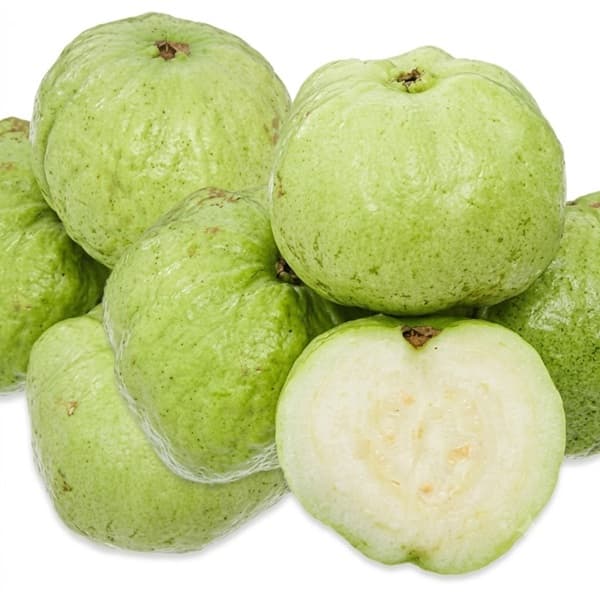
The Queen Guava (*Psidium guajava*, Myrtaceae family) is a guava variety originating from Asia that has been introduced and widely cultivated in Vietnam. It is grown in many of the country's fruit-producing regions, particularly those with tropical climates.
**Key Characteristics**
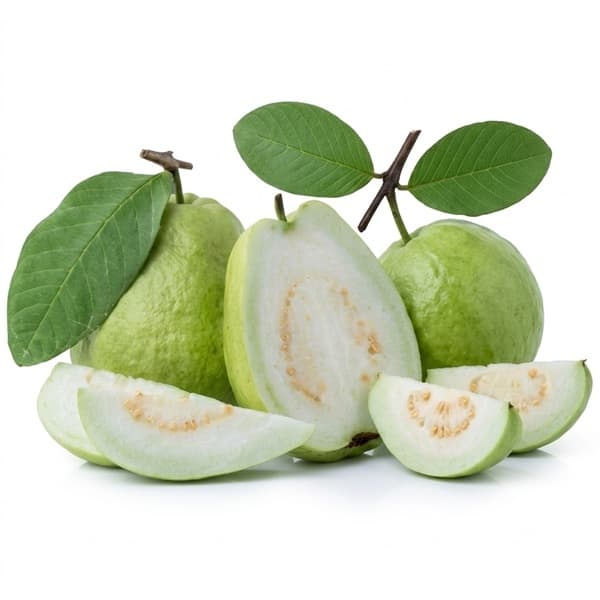
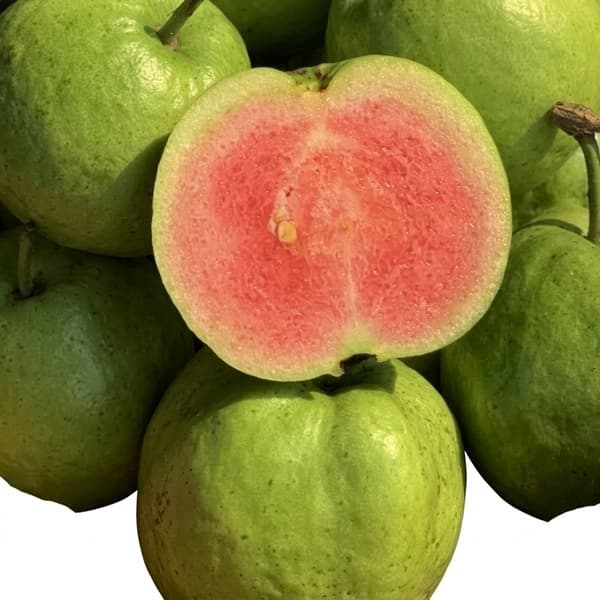
The fruit is relatively large, typically spherical or slightly flattened, with faint vertical ridges on the surface.
The skin is light green, relatively thin, and fairly smooth.
The flesh is thick, creamy white, juicy, and distinctively crisp.
The central seed cavity is small with few seeds; some fruits may be almost seedless.
The fruit has an attractive appearance; its size and crispness can vary depending on the specific cultivar, growing region, and time of harvest.
**Flavor & Texture**
Queen Guava offers a mild, refreshing sweetness, a subtle aroma, and a pronounced crispness. With its juicy, thick flesh and small seed cavity, it provides a meaty eating experience with minimal seeds. As the fruit ripens further, the texture softens and the sweetness becomes more intense.
**Uses & Applications**
Can be eaten fresh when crisp and at the optimal stage of ripeness.
Sliced or cut into pieces for fruit platters.
Juiced or blended into beverages.
Used to make jams, dried snacks, and other processed guava products.
Can be paired with salt, sugar, chili, or other seasonings to create a seasoned fruit snack.
**Nutritional Profile**
Queen Guava provides Vitamin C, dietary fiber, water, various vitamins and minerals, and natural plant compounds. Specific nutritional content may vary depending on the cultivar, ripeness, and cultivation conditions.