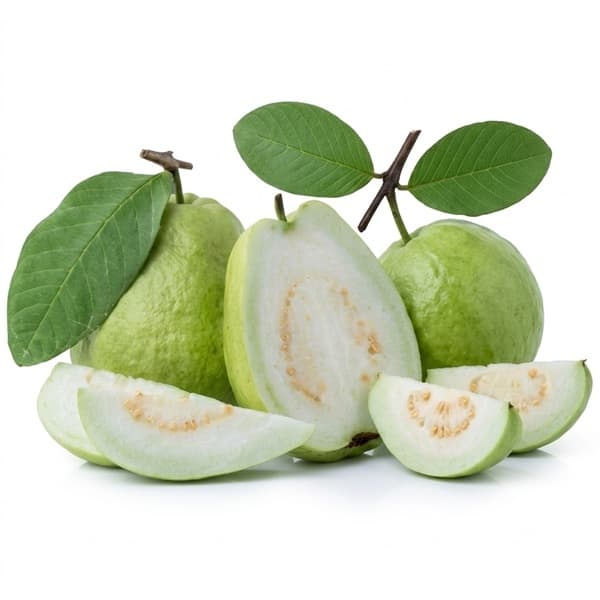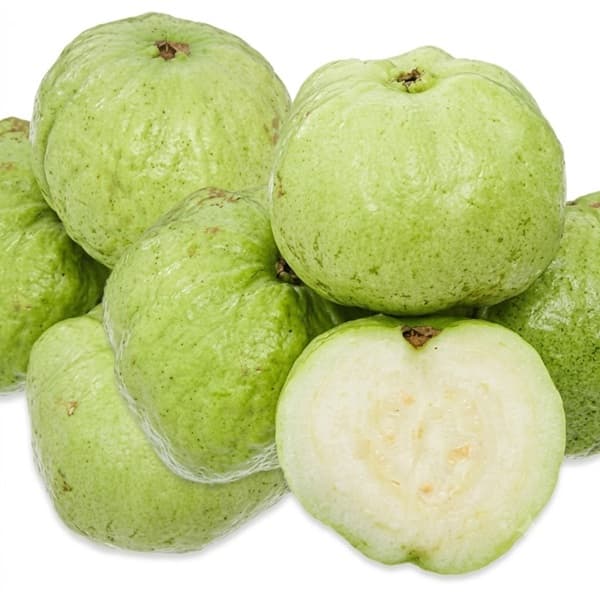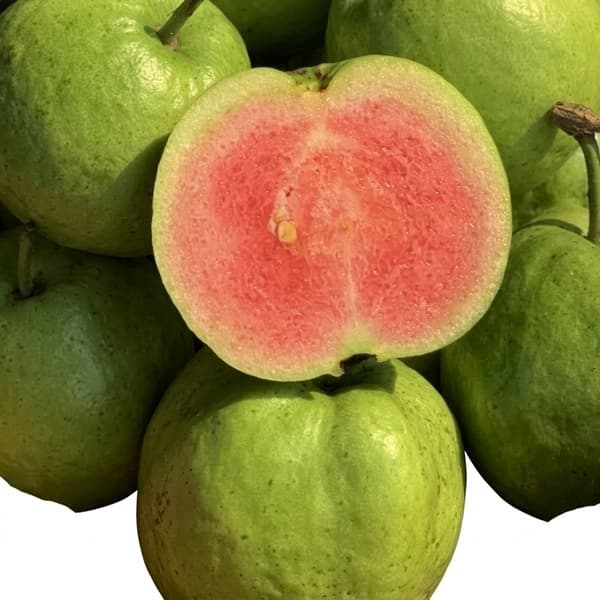

The Tan Chau guava (*Psidium guajava*, Myrtaceae family) is a variety originating from the Tan Chau region of An Giang province. It is distinguished by its large size, thick and crisp flesh, low seed count, and mild, refreshing sweetness. Tan Chau guavas are currently cultivated in various areas across Southern Vietnam.
Key Characteristics
The fruit is large, typically round or slightly elongated, with a well-balanced shape.
The skin is green with a relatively smooth surface; upon ripening, it may turn greenish-yellow or pale yellow.
The flesh is thick and white, offering a distinct crispness and high water content.
The seed cavity is relatively small with few seeds, providing a meaty texture when eaten.
Fruit size varies depending on the specific cultivar, cultivation conditions, and harvest timing; commercial sources often report weights ranging from 300 to 500 grams.
Flavor & Texture
Tan Chau guava features a mild sweetness, a subtle aroma, and a characteristic crispness. The flesh is juicy, thick, and firm, with relatively few seeds. As the fruit ripens further, the sweetness and aroma intensify, while the texture tends to soften.
Uses and Applications
Eaten fresh when crisp and at the optimal stage of ripeness.
Sliced or cut into pieces for fruit platters.
Juiced or blended into beverages.
Used to make jams, dried snacks, and other processed guava products.
Paired with salt, sugar, chili, or other seasonings to create fruit-based snacks.
Nutritionally, Tan Chau guava provides Vitamin C, dietary fiber, water, various vitamins and minerals, and natural plant compounds. Nutritional composition may vary based on the cultivar, ripeness, and cultivation conditions.