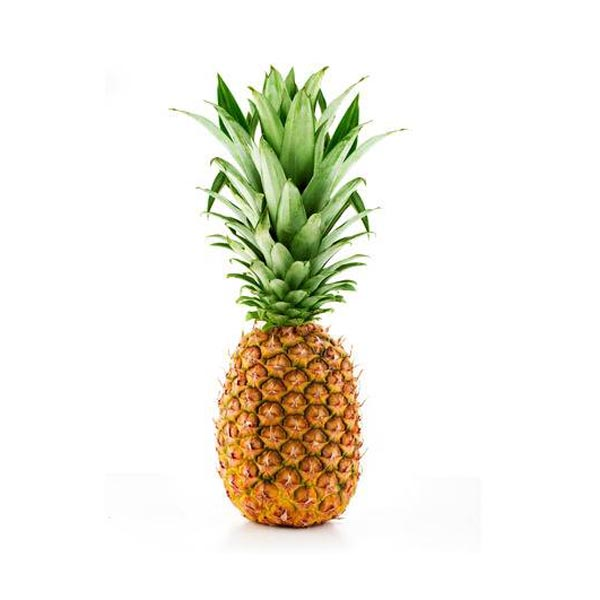

"Thai Pineapple" refers to a variety of pineapple originating from Thailand; it was subsequently introduced for cultivation and commercial trade in numerous tropical countries, including Vietnam. Through selective breeding and propagation, specific genetic lines have been developed to offer distinct characteristics regarding fruit size, sweetness, flesh color, and intended use. These pineapples are currently grown in various agricultural regions across Vietnam, supplying both the fresh fruit market and the processing industry.
**Key Characteristics**
Thai pineapples are relatively large and well-proportioned, typically cylindrical, conical, or slightly oval in shape. The rind features the characteristic pattern of evenly arranged "eyes" found on pineapples, transitioning from green to greenish-yellow or yellow as the fruit ripens. The flesh is usually yellow and juicy, with a central core that is firmer in texture than the surrounding flesh. Size, color, and ripeness may vary depending on the specific variety, growing region, and season.
**Flavor & Texture**
The fruit offers a natural sweetness balanced by mild acidity, a distinctive aroma, and high water content. The flesh is juicy and tender yet retains a slight crispness, depending on the variety and stage of ripeness. When fully ripe, the flesh becomes softer and the sweetness more pronounced.
**Uses & Applications**
Pineapple is a versatile ingredient suitable for restaurants, eateries, cafés, beverage shops, central kitchens, and food processing facilities.
* **Fresh consumption:** Enjoyed directly after peeling, removing the eyes, and slicing.
* **Juice & beverages:** Used for pineapple juice, smoothies, fruit blends, and various café beverages.
* **Pre-cut fruit:** Combined with watermelon, guava, mango, cantaloupe, and other fruits.
* **Salads & mixed dishes:** Paired with greens, cold cuts, seafood, or dressings. Stir-frying & cooking: ideal for pineapple meat stir-fries, seafood dishes, and fried rice or noodles.
Braising & soups: imparts a natural sweet-and-sour flavor to fish, meat, and sour soups.
Pizza & Western cuisine: suitable as a topping or a complementary ingredient.
Food processing: ideal for making jams, syrups, sauces, and processed fruit products, or for use in central kitchens.
Nutritionally, pineapple provides vitamin C, dietary fiber, water, various vitamins and minerals, and natural plant compounds. Nutritional content and flavor may vary depending on the variety, ripeness, and storage conditions.