
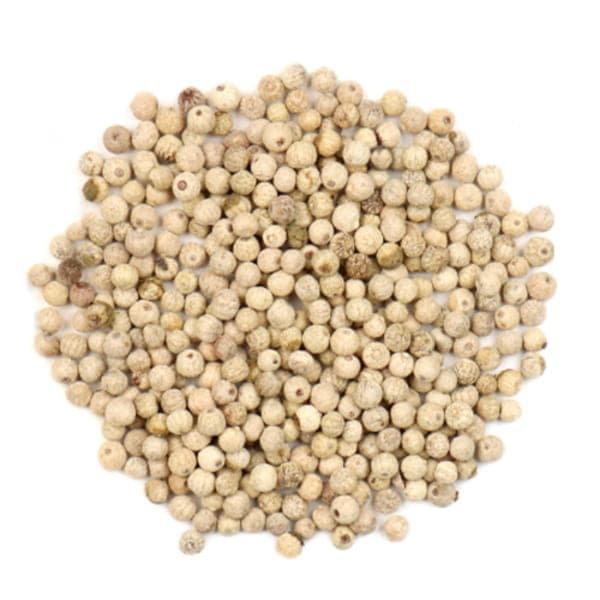
White Pepper (Piper nigrum) belong to the pepper family (Piperaceae). They are produced from mature or nearly mature pepper berries, which are processed to remove the outer skin while retaining the inner seed. White peppercorns are generally round, small in size, with an ivory-white to creamy-white surface that is relatively dry and firm. White pepper has a characteristic spicy aroma, pronounced pungency and a warm aftertaste.
Characteristic Features
The peppercorns are round or slightly irregular in shape, small in size and relatively uniform. Their surface ranges from ivory-white to creamy white and may appear slightly wrinkled or mildly rough depending on the processing and drying conditions.
The peppercorns have a dry, hard and firm texture with low moisture content, without excessive softness, dampness or clumping. The surface should be relatively clean, without mold, abnormal discoloration or signs of insect damage.
Good-quality raw material should consist of relatively intact and clean peppercorns, free from foreign matter, insects and pests. They should have no musty, sour, fermented or other abnormal odors, and should have the characteristic spicy aroma of pepper.
Flavor & Texture
White peppercorns have a characteristic spicy aroma, pronounced pungency and a warm, rich aftertaste. Compared with black pepper, white pepper generally has a milder aroma but can provide a more direct and noticeable pungency.
When whole, white peppercorns have a hard and dry texture. When ground or crushed, they break into small pieces or fine powder, releasing their characteristic aroma and pungent flavor.
Good-quality raw material should not have an abnormal bitter taste, sour flavor, musty, rancid or fermented odors.
Uses & Applications
Used as a seasoning to provide pungency and enhance aroma in various dishes.
It can be used whole, crushed or ground into powder for seasoning soups, stews, braised dishes, stir-fries and various sauces.
It can be used to marinate meat, fish, seafood and other ingredients before cooking, providing characteristic pungency and aroma.
White pepper is also commonly used in light-colored dishes where a spicy flavor is desired without the visible appearance of dark-colored pepper particles.
Nutritionally, white pepper provides small amounts of dietary fiber, minerals and naturally occurring compounds characteristic of pepper, including piperine; nutritional values depend on the variety, processing level and method of use.