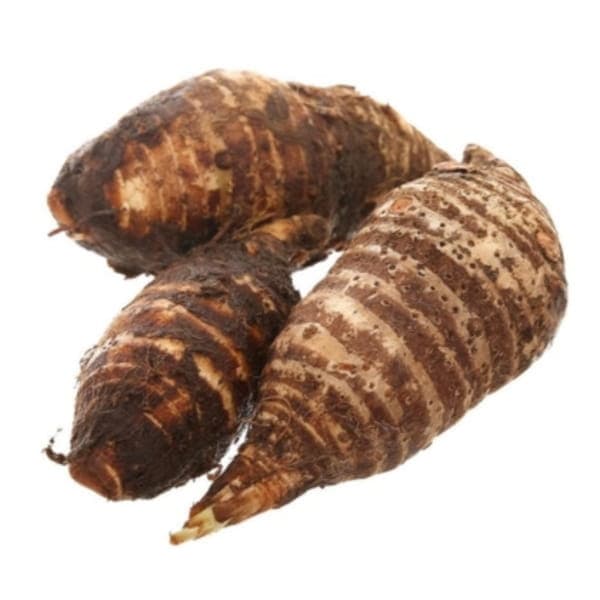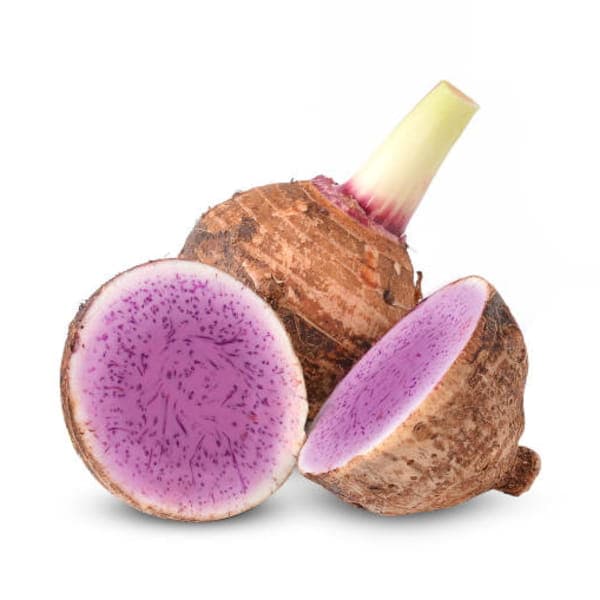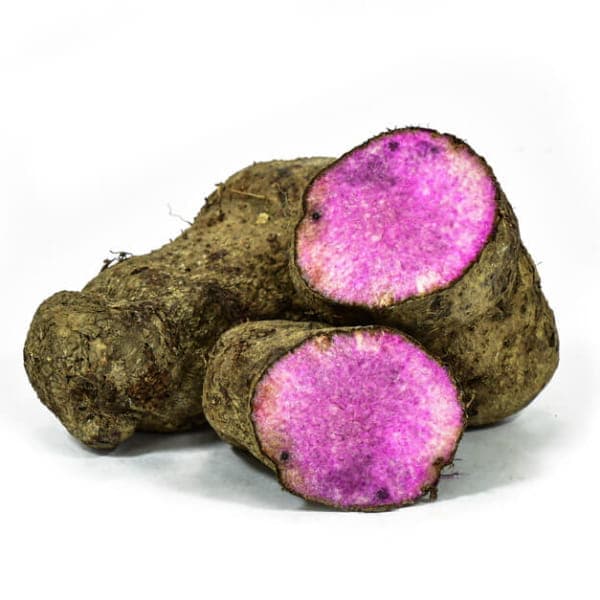
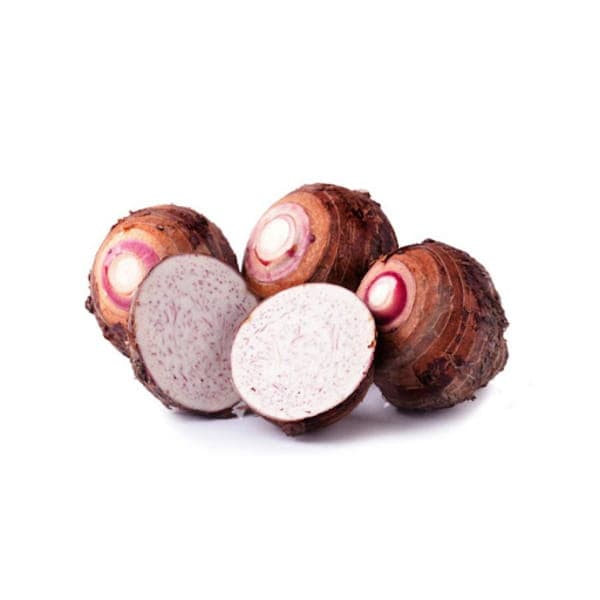
White Taro is the corm of the taro plant (Colocasia esculenta), belonging to the Araceae family. White taro is a taro variety characterized by its elongated corm, white to off-white flesh, and occasional light purple spots or streaks. It is commonly used in savory dishes, sweet soups, desserts, and bakery products.
Characteristic Features
The corm is elongated and relatively large, with a taller upper portion and natural rings or growth markings on the surface.
The outer skin ranges from grayish brown to light brown, with a slightly rough surface, natural eyes, and characteristic growth marks.
The flesh ranges from off-white to creamy white and may contain characteristic light purple spots or streaks.
Fresh corms should be firm with an intact surface, without bruising, excessive softness, decay, or visible mold.
When cooked, the flesh becomes soft, crumbly, slightly sticky, and naturally cohesive.
Flavor & Texture
White taro has a characteristic aroma with a mildly nutty, creamy, and naturally delicate flavor. When cooked, the flesh becomes soft, crumbly, smooth, and slightly sticky. This texture makes it suitable for mashed preparations, sweet soups, cakes, and other taro-based products.
Uses and Applications
Boiled or steamed after proper preparation and thorough cooking.
Used in soups, stews, and dishes combined with meat or other vegetables.
Used in fried, pan-fried, or roasted taro preparations.
Used as an ingredient in taro sweet soups, mixed sweet soups, and desserts.
Used as a filling for pastries, taro cakes, sweet baked products, and flour-based products.
Used to prepare mashed taro or combined with milk, cream, and other ingredients.
Can be dried or ground into taro powder for use in food products.
Nutritionally, white taro provides carbohydrates, dietary fiber, potassium, vitamin B6, vitamin E, and various minerals, while also containing natural plant compounds.