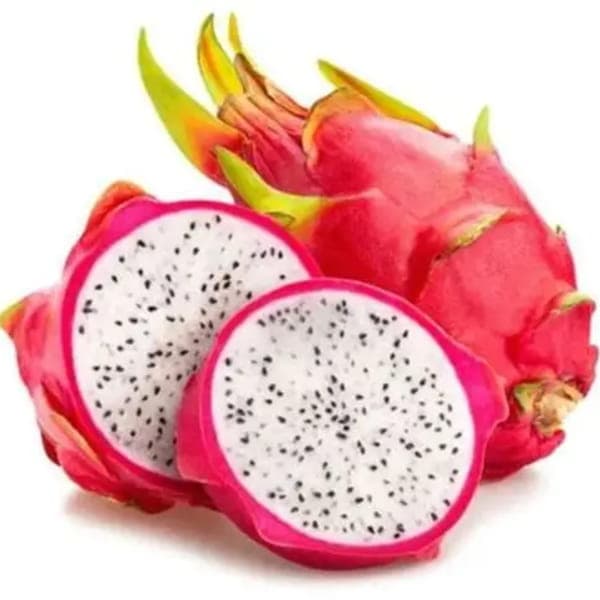

Yellow Dragon Fruit is a fruit belonging to the cactus family (Cactaceae), native to Central and South America and now cultivated in many tropical and subtropical regions. In Vietnam, Yellow Dragon Fruit is grown in selected areas with suitable climatic conditions. The fruit is oval or elongated, with yellow skin when ripe, characteristic green or yellow-green scales, and white to off-white flesh containing numerous small black seeds. Yellow Dragon Fruit has a naturally sweet flavor, mild aroma, and juicy flesh.
Distinctive Characteristics
The fruit is oval or elongated, with size varying depending on the variety, growing conditions, and harvest maturity.
When ripe, the skin develops a bright yellow to yellow-orange color, with characteristic green or yellow-green scales.
The flesh ranges from white to off-white, with a juicy texture and numerous small black seeds distributed throughout the flesh.
Good-quality fruit generally has intact skin, relatively uniform color, fresh scales, and no signs of bruising, decay, or fermentation.
The flesh is soft, juicy, and moderately firm when the fruit reaches suitable maturity.
Fruit size, skin color, sweetness, juiciness, and flesh texture may vary depending on the variety, growing region, and harvest maturity.
Flavor & Texture
Yellow Dragon Fruit has a naturally sweet flavor, low acidity, and a mild aroma. The flesh is soft, juicy, and moderately firm, with small seeds providing its characteristic texture. When fully ripe, the flesh develops a more pronounced sweetness and a refreshing eating experience.
Uses & Applications
Fresh consumption: peeled or cut in half and eaten directly.
Ready-to-eat fruit: cut into slices or cubes and combined with other fresh fruits.
Salads: combined with melon, watermelon, grapes, apples, and other fruits.
Smoothies & juices: blended on its own or combined with other fruits.
Desserts: served with yogurt, ice cream, pudding, cakes, and other desserts.
Food decoration: used in slices or pieces to decorate dishes, salads, and beverages.
Processing: used to make purées, juices, jams, and other fruit-based products.
Preparation: used as whole fruit or peeled, sliced, or cut into pieces according to the intended application.
Nutritionally, Yellow Dragon Fruit provides water, dietary fiber, vitamin C, some B vitamins, potassium, magnesium, and naturally occurring plant compounds.