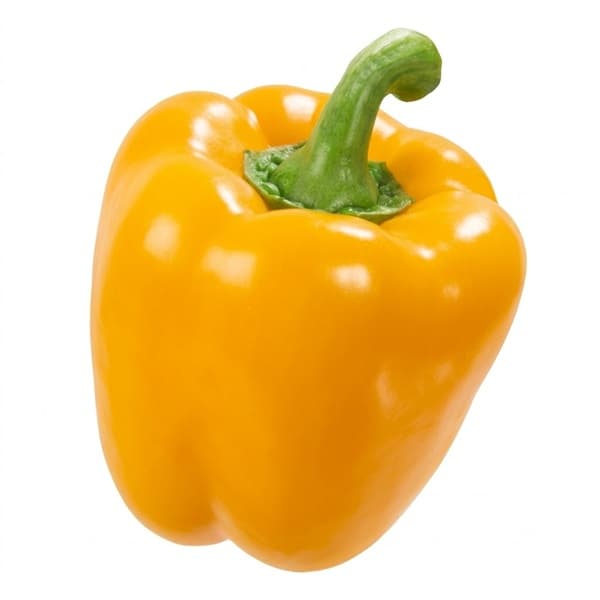
Yellow Bell Pepper is a bell pepper variety characterized by its distinctive yellow color when it reaches the appropriate stage of maturity. It belongs to the Solanaceae family and originated in Central and South America. Today, bell peppers are widely cultivated in many countries, including Vietnam. The fruit has broad shoulders, a well-balanced shape, thick crisp flesh, high moisture content, and a mild natural sweetness with little to no heat.
Distinctive Characteristics
The fruit is generally round, blocky, or slightly elongated, with broad shoulders that gradually taper toward the stem.
The skin ranges from pale yellow to bright yellow, with a smooth, firm, and glossy surface when the fruit is in good condition.
The flesh is yellow to pale yellow, relatively thick, crisp, and juicy. The interior is hollow and contains numerous small white or cream-colored seeds.
Good-quality yellow bell peppers are generally firm, well-shaped, evenly colored, with fresh green stems and no signs of bruising, shriveling, or decay.
Size, flesh thickness, sweetness, and color may vary depending on the variety, growing conditions, harvest time, and maturity.
Flavor & Texture
Yellow Bell Peppers have a mild natural sweetness, light aroma, and little to no noticeable heat. Compared with green bell peppers, yellow bell peppers generally have a sweeter flavor and less bitterness. The flesh is thick, crisp, and juicy when fresh, becoming softer when cooked while retaining a relatively firm structure.
Uses & Applications
Fresh consumption: eaten raw after washing, removing the stem and seeds, and slicing or cutting as desired.
Salads: combined with lettuce, tomatoes, cucumbers, onions, and other vegetables.
Stir-frying: cooked with beef, pork, chicken, seafood, mushrooms, or other vegetables.
Grilling & pan-searing: cooked whole or cut into pieces to enhance aroma while maintaining texture.
Stuffed dishes: used as a vessel for fillings such as meat, seafood, eggs, or vegetables.
Pizza & pasta: combined with meat, mushrooms, cheese, and various sauces.
Soups & stews: sliced or diced to add color, texture, and natural sweetness.
Preparation: stems and seeds can be removed before slicing, cutting, or dicing according to the intended application.
Nutritionally, yellow bell peppers provide vitamin C, vitamin A, vitamin B6, folate, potassium, dietary fiber, and natural carotenoid compounds. Nutritional composition may vary depending on the variety, maturity, growing conditions, and storage.