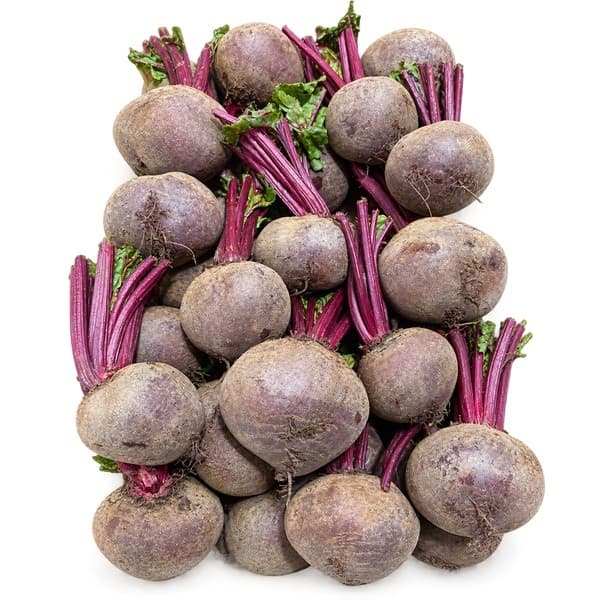

Beetroot (Beta vulgaris) is the edible root of the beet plant, belonging to the Amaranthaceae family. The root is generally round, oval, or elongated, with red-purple to deep-red skin and characteristically colored flesh. Beetroot is commonly used in salads, soups, juices, roasted and boiled dishes, and various other culinary preparations.
Characteristic Features
The root may be round, oval, or elongated depending on the variety.
The skin ranges from red-purple to deep red or reddish-purple, with a relatively smooth surface.
The flesh is typically deep red-purple and may show lighter and darker concentric rings depending on the variety.
The root has a firm, juicy structure and may retain green leaf stalks at the top.
Good-quality beetroot should be fresh, firm, and intact, free from bruising, decay, excessive softness, mold, or abnormal odor.
Flavor & Texture
Beetroot has a characteristic mild earthy aroma, natural sweetness, and a fresh flavor. When raw, the flesh is firm and slightly crisp; after cooking, it becomes tender and juicy while retaining its characteristic red-purple color.
Uses and Applications
Used in salads and vegetable mixes.
Used in soups and stewed dishes.
Boiled, steamed, or roasted.
Juiced or blended for beverage preparations.
Used as a natural coloring ingredient in selected foods and food products.
Used in vegetarian and plant-based preparations.
May be sliced, diced, cut into sections, or blended according to preparation requirements.
Nutritionally, beetroot provides dietary fiber, folate, vitamin C, potassium, manganese, and naturally occurring plant compounds, including betalains responsible for its characteristic red-purple color.