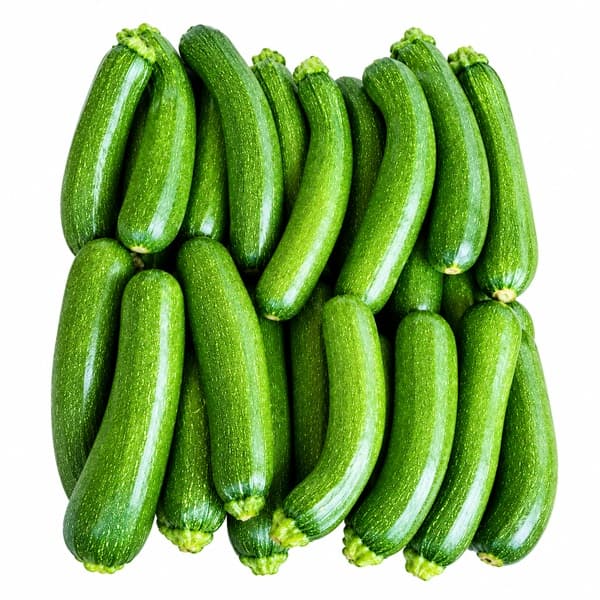

Bottle Gourd is a fruit belonging to the Cucurbitaceae family, widely cultivated in Vietnam and many tropical and subtropical regions. The fruit is elongated and cylindrical or slightly swollen in the middle, with green skin and white to pale green flesh. When harvested young, it has high moisture content, tender flesh, and a mild, refreshing flavor, and is commonly used as a vegetable in cooking.
Distinctive Characteristics
The fruit is elongated and cylindrical or slightly swollen in the middle, depending on the variety, with size varying according to the harvesting stage.
The skin ranges from light green to dark green, with a relatively smooth surface that may have a thin natural waxy coating.
The flesh is white to pale green, soft and juicy, with numerous flat white or cream-colored seeds concentrated in the core.
Good-quality fruit has fresh, firm, and taut skin, a green stem, and no signs of bruising, cracking, or decay.
Bottle Gourd is generally harvested while young to retain its tender, juicy flesh and prevent the seeds from becoming overly hard.
Flavor & Texture
Bottle Gourd has a mild, refreshing flavor with a subtle natural sweetness and delicate aroma. The flesh is soft and juicy, with a slight crispness when fresh. When cooked, it becomes softer while retaining its moisture and readily absorbing the flavors of broths and seasonings.
Uses & Applications
Used in soups with meat, shrimp, bones, or other ingredients.
Stir-fried with meat, eggs, seafood, or other vegetables.
Boiled or steamed and served with dipping sauces.
Used in stews, soups, and braised dishes.
Young fruit can be used in selected salads or vegetable dishes where a slightly crisp texture is desired.
Used as an ingredient in cakes, sweet soups, and various traditional dishes.
Nutritionally, Bottle Gourd provides water, dietary fiber, vitamin C, vitamin B2, potassium, and various minerals. Nutritional values may vary depending on the variety, maturity, and storage conditions.