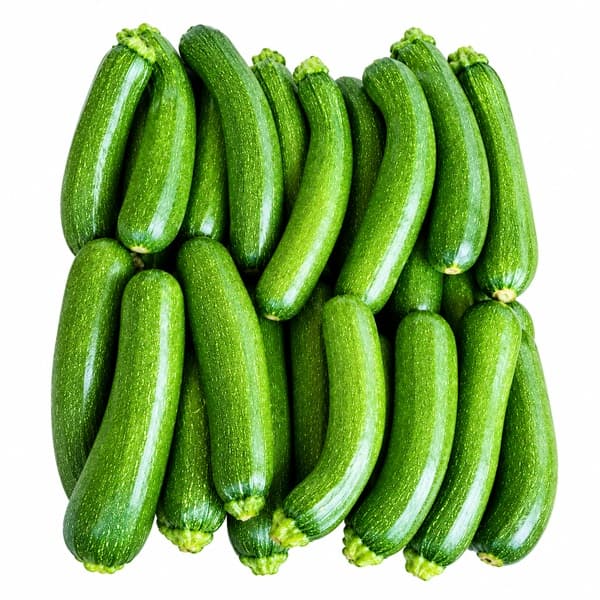
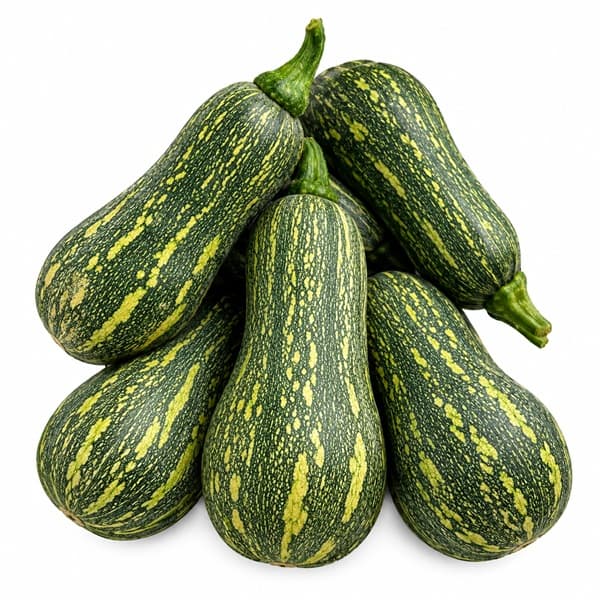
Butternut Squash is a type of squash belonging to the Cucurbitaceae family, characterized by its distinctive bottle-like shape with a wider lower section and a long, slender neck. The skin is typically green when young and changes to creamy yellow or golden brown as the fruit matures. The flesh is yellow-orange, dense, smooth, and naturally sweet. Butternut Squash is widely used in cooking and can be stored relatively well when harvested at an appropriate stage of maturity.
Distinctive Characteristics
The fruit has a distinctive bottle-like shape, with a wider lower section and a long, slender neck, and is relatively uniform in size.
The skin is relatively firm, with a smooth or slightly ridged surface. It is green when young and changes to creamy yellow, golden brown, or light brown as the fruit matures, depending on the variety.
The flesh ranges from yellow-orange to deep orange, with a thick, smooth, and relatively firm texture. The seed cavity is concentrated in the lower section and contains numerous flat, cream-colored seeds.
Good-quality squash has firm skin without cracks, deep bruising, or signs of decay; the flesh should not be waterlogged, moldy, or have an abnormal odor.
When harvested at the appropriate stage of maturity, the flesh has a distinct color, firm structure, and moderate moisture content, making it suitable for storage and cooking.
Flavor & Texture
Butternut Squash has a naturally sweet flavor, a mild aroma, and a slightly nutty aftertaste. The flesh is dense, smooth, and relatively low in fiber, becoming soft, tender, and more distinctly nutty when cooked. It absorbs seasonings well while retaining its characteristic yellow-orange color.
Uses & Applications
Used in soups, broths, and stews.
Steamed or boiled to retain its natural sweetness and nutty flavor.
Used as an ingredient in porridge, squash soup, and puréed dishes.
Roasted or pan-seared with various seasonings and other ingredients.
Used as an ingredient in pumpkin cakes, puddings, and other desserts.
Can be stir-fried, fried, or combined with meat, seafood, and other vegetables.
Nutritionally, Butternut Squash provides carbohydrates, dietary fiber, vitamin A, vitamin C, vitamin E, folate, potassium, and naturally occurring carotenoid compounds. Nutritional values may vary depending on the variety, maturity, and storage conditions.