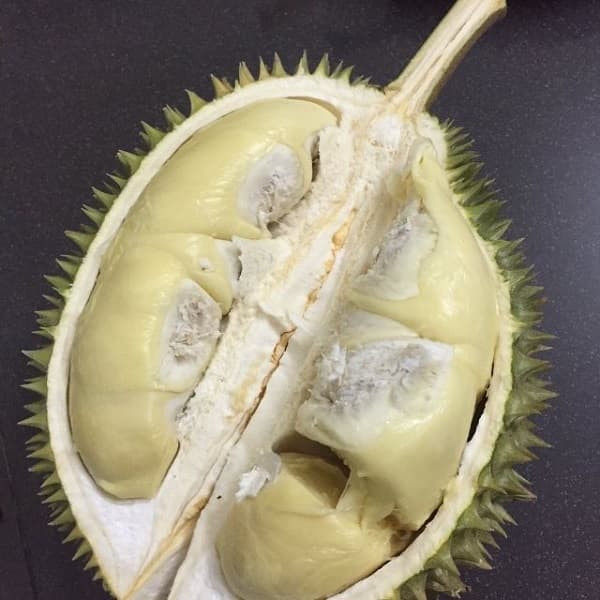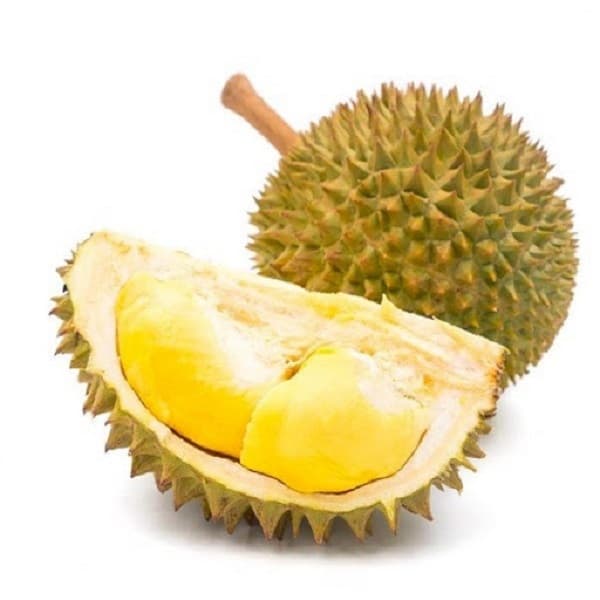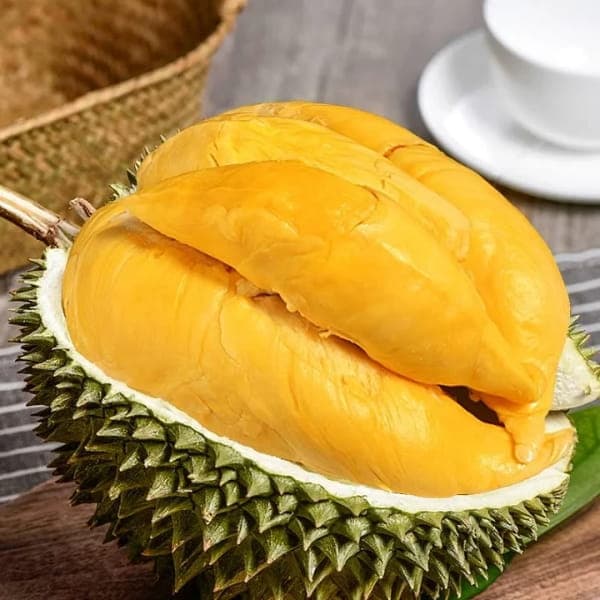
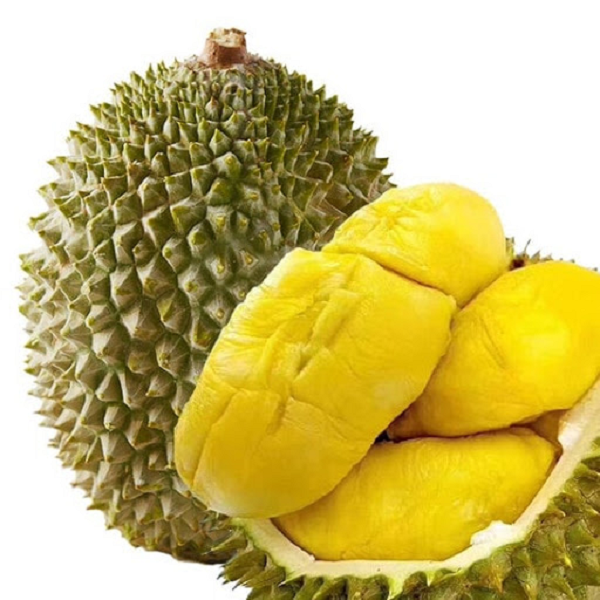
Cai Mon Durian has the scientific name Durio zibethinus and belongs to the Malvaceae family. It is a durian product associated with the Cai Mon area, Cho Lach District, Ben Tre Province, in the Mekong Delta of Vietnam. The fruit has green to greenish-brown skin with relatively sparse spines, while the flesh ranges from yellow to pale yellow, with a thick, rich texture, sweet and creamy flavor, and a distinctive aroma.
Characteristic Features
The fruit is round, oval or slightly elongated depending on the variety and is generally medium to large in size. The peel is divided into distinct sections and covered with relatively evenly distributed sharp spines.
The skin is usually green to greenish-yellow and may develop a yellowish or brownish tone as the fruit matures, depending on variety and maturity. The stem should remain fresh and firm without excessive drying or deterioration.
The flesh ranges from pale yellow to deeper yellow, with a relatively thick, soft and creamy texture. Seed size varies by variety, while good-quality fruit generally has a relatively low seed proportion.
Fruit at suitable maturity should have fully developed flesh with characteristic color and no abnormal hard, watery or fermented areas. The peel should be intact and free from decay or insect damage.
Acceptable raw material should be fresh and intact, without bruising, decay, mold or abnormal odors. The flesh should not be excessively dry, underdeveloped, watery or discolored.
Flavor & Texture
The flesh is soft, thick, creamy and moderately sticky depending on the variety. It has a characteristic sweet and rich flavor with a pronounced aroma, while flavor intensity varies according to variety and maturity. Good-quality fruit should not have abnormal sourness, bitterness or fermented odors.
Uses and Applications
Used for fresh consumption after removing the peel and separating the edible flesh.
Can be used as an ingredient in durian ice cream, smoothies, sweet soups, cakes and desserts.
The edible flesh can also be frozen for storage and used in various durian-based preparations.
Nutritionally, durian provides energy, carbohydrates, fat, protein, dietary fiber, vitamins and minerals; nutritional composition varies according to variety and maturity.