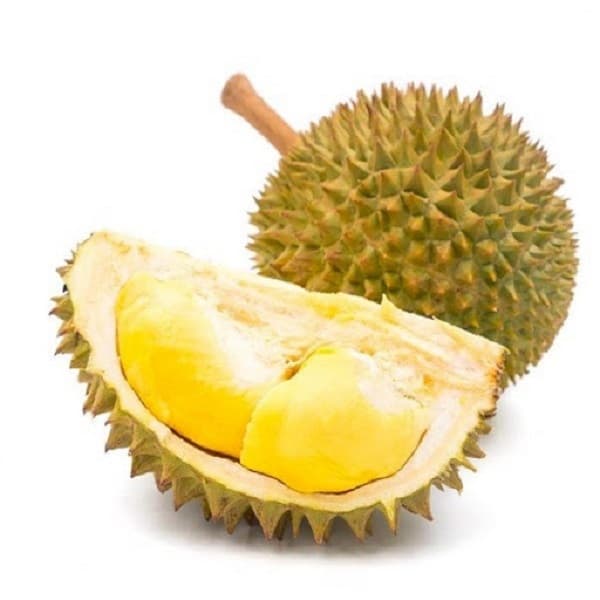
Dona Durian (Durio zibethinus) belongs to the Malvaceae family. “Dona Durian” is a commercial name commonly used for the Monthong variety, which originated in Thailand and is now cultivated in several durian-growing areas of Vietnam. The fruit is generally large and elongated, with green to greenish-brown skin and relatively sparse, large spines. The flesh is creamy yellow to deep yellow, thick, relatively dry, sweet and characteristically aromatic.
Characteristic Features
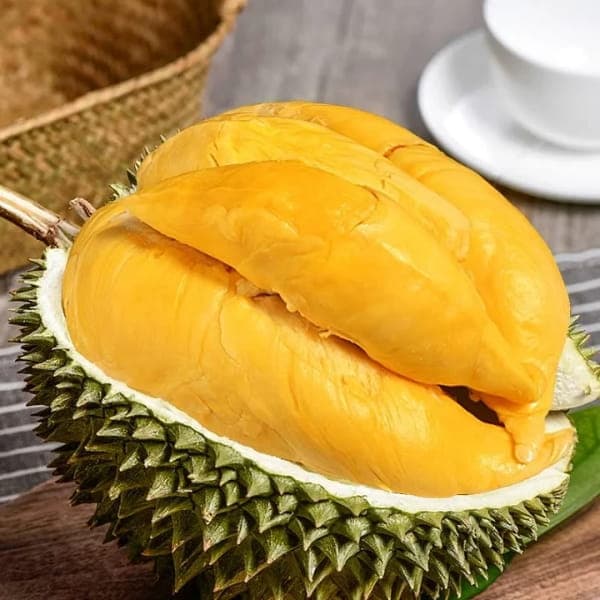
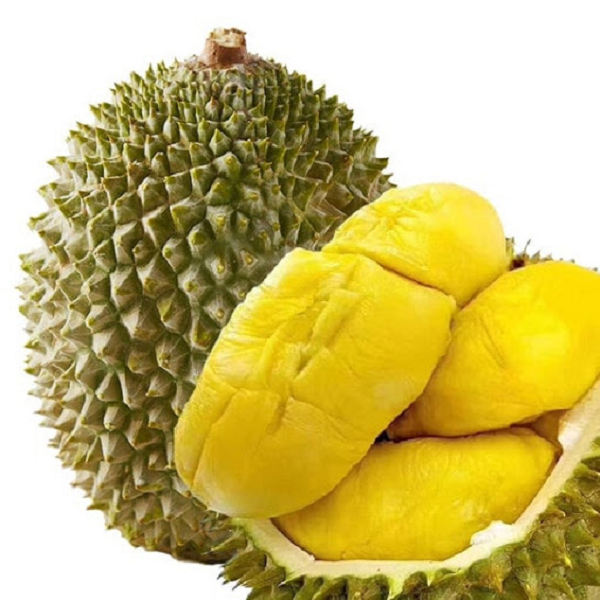
The fruit is elongated or slightly oval and generally large in size, with clearly defined sections on the peel. The spines are relatively sparse, with moderately blunt tips and are generally larger than those of some local durian varieties.
The skin ranges from green to greenish-brown depending on maturity and is relatively firm and thick. The stem is usually firm and may range from green to light brown as the fruit reaches suitable maturity.
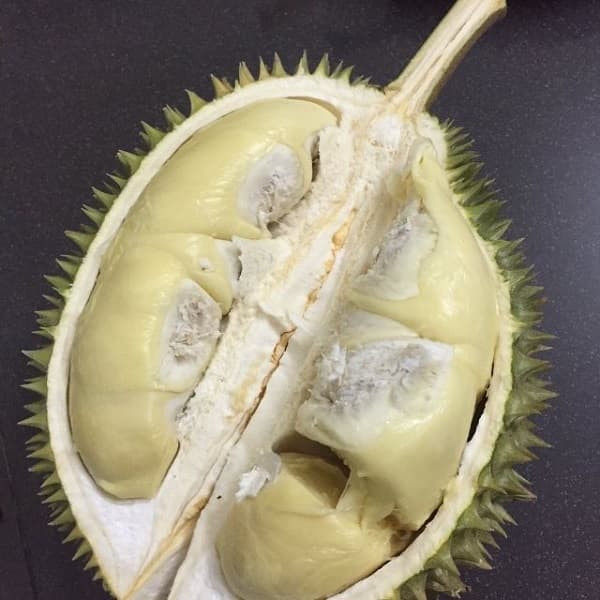
The flesh is creamy yellow to deep yellow, with large, thick segments, a soft but relatively dry texture and low fibrous content. The seeds are generally medium to large in size, depending on the fruit.
Fruit at suitable maturity should have fully developed flesh with characteristic yellow coloration and a moderately soft texture, without abnormal firmness, excessive mushiness or watery areas. The peel should be free from cracking, decay and significant insect damage.
Acceptable raw material should be fresh and intact, without bruising, decay, mold or abnormal odors. The flesh should not be excessively dry, hard, underdeveloped, watery or discolored.
Flavor & Texture
The flesh is soft, thick, smooth and relatively dry. It has a distinctly sweet flavor with moderate richness and a characteristic durian aroma that is generally milder than some stronger-aroma varieties. Good-quality fruit should not have abnormal sourness, bitterness or fermented odors.
Uses and Applications
Used for fresh consumption after removing the peel and separating the edible flesh.
Can be used as an ingredient in durian ice cream, smoothies, sweet soups, cakes, mooncakes and other desserts.
The edible flesh can be separated, packaged and refrigerated or frozen for use in various food preparations.
Nutritionally, durian provides energy, carbohydrates, fat, protein, dietary fiber, vitamins and minerals; nutritional composition varies according to variety and maturity.