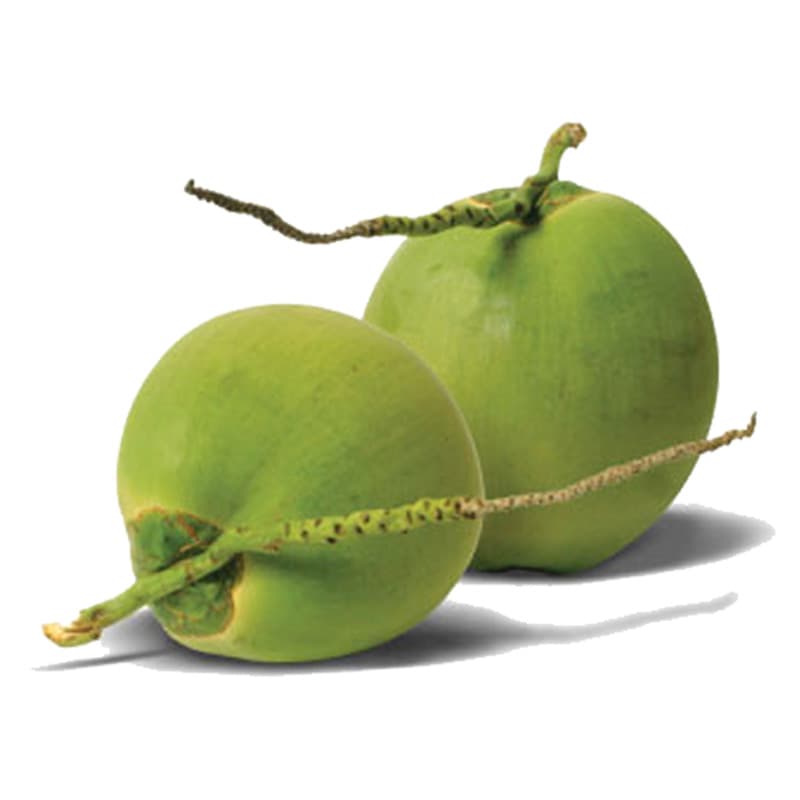

Fresh Vietnamese Coconut has the scientific name Cocos nucifera and belongs to the Arecaceae family. It refers to traditional coconut types widely cultivated in Vietnam, particularly in the Mekong Delta and coastal regions. The fruit is commonly harvested fresh for its coconut water and young flesh, which have a naturally refreshing sweetness and characteristic coconut aroma.
Characteristic Features
The fruit is round, oval or slightly elongated, with a medium size depending on the variety and harvesting maturity. The outer skin is generally green when fresh.
The fruit has a fibrous husk and a hard inner shell. The husk and outer covering should be relatively firm and intact, without cracks, breakage or visible signs of decay.
The coconut water is clear to slightly cloudy, naturally sweet, relatively abundant and mildly aromatic. Young coconut flesh is white, soft, smooth and juicy, with thickness depending on fruit maturity.
Fruit at suitable harvest maturity should have a fresh and firm surface, without bruising, cracking, mold or leakage. The coconut water should not be abnormally cloudy, sour-smelling or fermented.
Acceptable raw material should be fresh and intact, without mold, decay, cracks, breakage or abnormal odors. The coconut water and flesh should be free from signs of fermentation, sliminess or abnormal discoloration.
Flavor & Texture
The coconut water has a mildly sweet, refreshing flavor and a characteristic natural coconut aroma. Young coconut flesh is soft, smooth, juicy and slightly crisp, while more mature flesh becomes thicker and firmer. Good-quality coconut should not have a sour or bitter taste or abnormal fermented odor.
Uses and Applications
The coconut water can be consumed directly or used as an ingredient in beverages.
Young coconut flesh can be eaten fresh, used in desserts and fruit salads, or combined with other food preparations.
Coconut water can be used in cooking, braising, soups and other preparations as a natural source of sweetness.
Coconut flesh can be used to produce coconut milk, desserts and other coconut-based products.
Nutritionally, fresh coconut provides water, natural carbohydrates, potassium and various minerals; the coconut flesh also provides fat and energy, with composition varying according to fruit maturity.