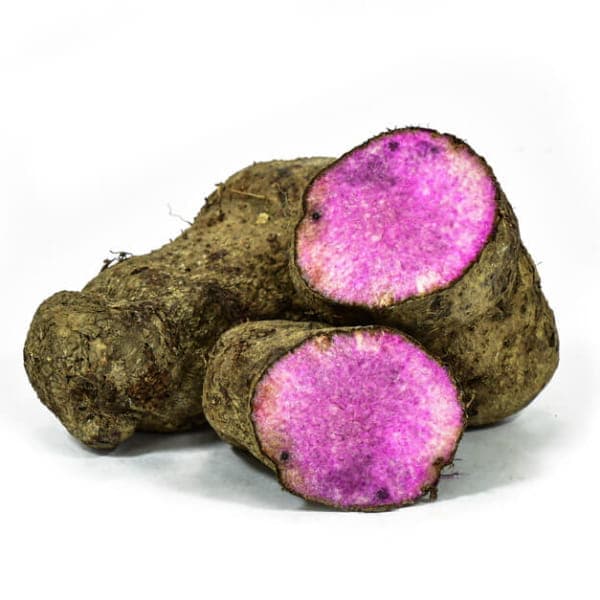
Purple Yam is the tuber of the purple yam plant (Dioscorea alata), belonging to the Dioscoreaceae family. Purple yam is widely cultivated in many tropical regions, including Vietnam. It is characterized by its naturally purple flesh, mildly sweet and nutty flavor, and soft, sticky texture after cooking.
Characteristic Features
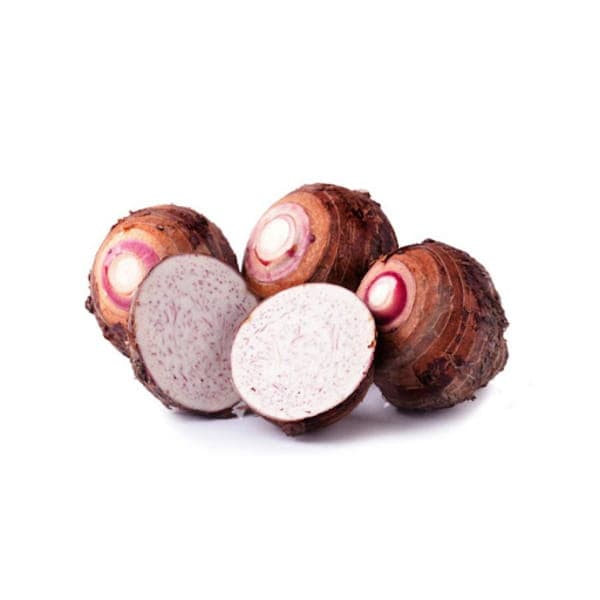
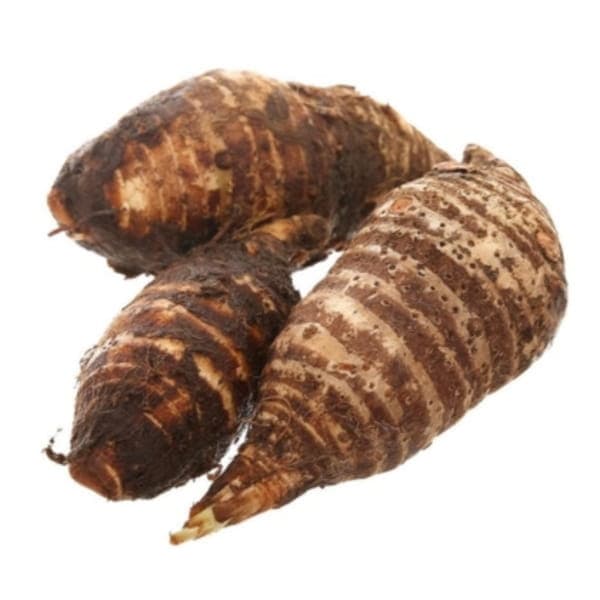
The tuber is generally long, cylindrical, or irregularly shaped, with a relatively large size that varies depending on the variety.
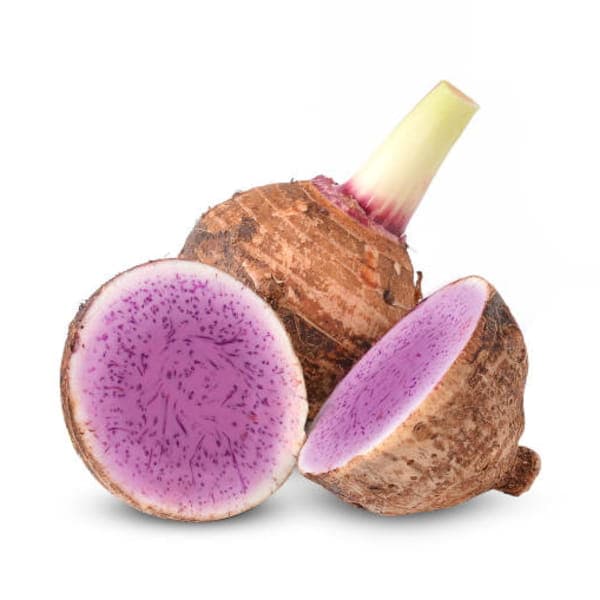
The outer skin ranges from grayish brown to dark brown, with a relatively rough surface and natural ridges or fine root markings.
The flesh ranges from light purple to deep purple, with color intensity varying according to the variety and maturity.
Fresh purple yam is firm, with moist flesh and a naturally mucilaginous texture when cut or mashed.
Good-quality fresh tubers should have an intact surface, without bruising, excessive softness, decay, or visible mold.
Flavor & Texture
Purple yam has a mild aroma with a naturally sweet, nutty, and slightly creamy flavor. When cooked, the flesh becomes soft, smooth, sticky, and naturally mucilaginous, creating a characteristic thickness in soups, porridges, and mashed preparations.
Uses and Applications
Used to prepare purple yam soup and soups combined with meat, shrimp, or fish.
Boiled or steamed for direct consumption after thorough cooking.
Used in porridges, soups, and mashed preparations.
Used as an ingredient in sweet soups, cakes, ice cream, and desserts.
Used as a filling for pastries and combined with milk, cream, or other ingredients.
Used as a natural purple coloring ingredient in certain food products.
Can be dried or ground into purple yam powder for use in processed food products.
Nutritionally, purple yam provides carbohydrates, dietary fiber, potassium, vitamin C, vitamin B6, and various minerals, while also containing natural plant compounds.