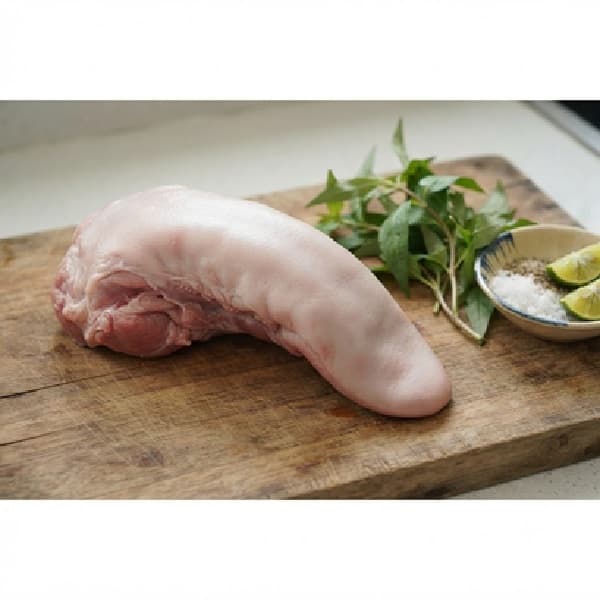

Pork shank is the meat located in the upper part of the pig's leg, just below the shoulder or thigh. Because this is a highly active muscle, the meat here is particularly firm, lean, and elastic.
Interwoven texture: A complete pork shank consists of a large mass of lean meat surrounding the bone in the center. Interspersed between the muscle fibers are layers of tendons and connective tissue, along with a moderate amount of fat under the skin.
Rich, chewy flavor: The lean meat in the pork shank has a rich, naturally sweet flavor. The tendons and connective tissue, when cooked thoroughly, become tender and chewy without being mushy, creating a pleasant chewing sensation. The fatty outer skin melts in your mouth when roasted or stewed.
"Excellent" moisture content: Thanks to its structure with many tendons and a layer of skin, pork knuckle retains water very well, preventing the meat from drying out during prolonged cooking and ensuring its tenderness and juiciness.
Pork knuckle is a versatile ingredient that can be used in many famous dishes, from snacks to main courses:
Braised Pork Knuckle: This is the most classic way to prepare it. The most famous is braised pork knuckle with Chinese herbs or braised pork knuckle with peanuts, where the knuckle is braised for many hours until the meat is tender, the skin is golden brown, and the broth is rich and flavorful. Another variation is Chinese-style braised pork knuckle with soy sauce or German-style Eisbein (salted pork knuckle stew).
Crispy Roasted/Fried Pork Hock: Crispy fried pork hock (salted pork hock) with a skin as crispy as rice crackers, and tender, juicy meat inside, served with sweet and sour fish sauce or chili sauce, is a favorite dish for many. Roasted pork hock is also a great choice for parties.
Smoked Pork Hock: Smoked pork hock gives it a distinctive flavor and is often used in soups and stews (such as pea soup) to enhance the dish's richness.
Cold Meat/Sausage: Pork hock meat is also used to make cold meats (like ham) or sausages due to its firm texture and balanced lean-to-fat ratio.