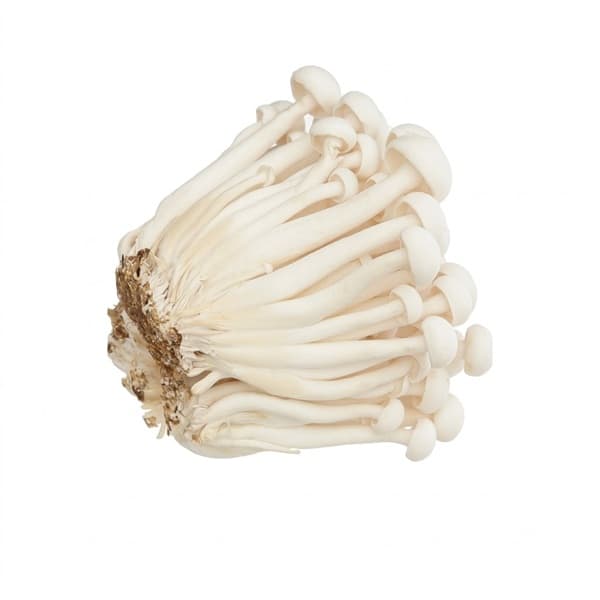
White Shimeji Mushroom is an edible mushroom belonging to the genus Hypsizygus, commonly known as white shimeji. It originates from East Asia and is now widely cultivated on various organic substrates under controlled conditions. The mushrooms grow in clusters, characterized by white to creamy-white caps and firm white stems.
Distinctive Characteristics
The caps range from white to creamy white, with a round or slightly domed shape and a relatively smooth surface.
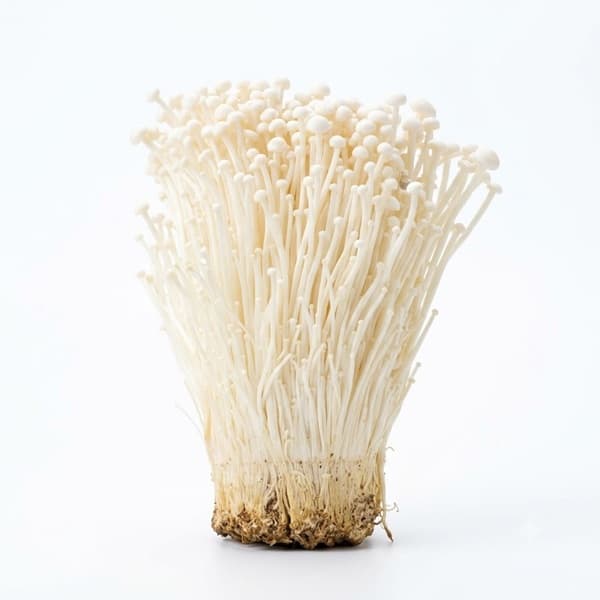
The stems are white, slender, and grow in clusters, with the mushrooms often connected at the base.
The flesh is white, firm, and relatively resilient.
The mushrooms are commonly harvested as intact clusters, helping maintain their shape and making them convenient for preparation and cooking.
Flavor & Texture
White shimeji mushrooms have a characteristic mushroom aroma, a mildly sweet taste, and a natural umami flavor. When fresh, they have a firm and slightly crisp texture; after cooking, they become softer while retaining a slight chewiness, particularly in the stems. Their aroma and umami flavor become more pronounced when cooked, while the mushrooms readily absorb seasonings and sauces.
Uses & Applications
Can be stir-fried with vegetables, meat, or other ingredients.
Suitable for hot pots, soups, and broths.
Can be grilled or pan-seared to retain their firm texture and enhance their natural aroma.
Suitable for steaming, braising, or cooking with broth.
Can be used in both vegetarian and non-vegetarian dishes.
The caps and stems can be separated or the mushrooms can be used as intact clusters, depending on the preparation method.
Nutritionally, white shimeji mushrooms provide dietary fiber, protein, several B vitamins, potassium, phosphorus, and naturally occurring compounds found in mushrooms. Nutritional composition may vary depending on the variety, growing substrate, cultivation conditions, and maturity of the mushrooms.