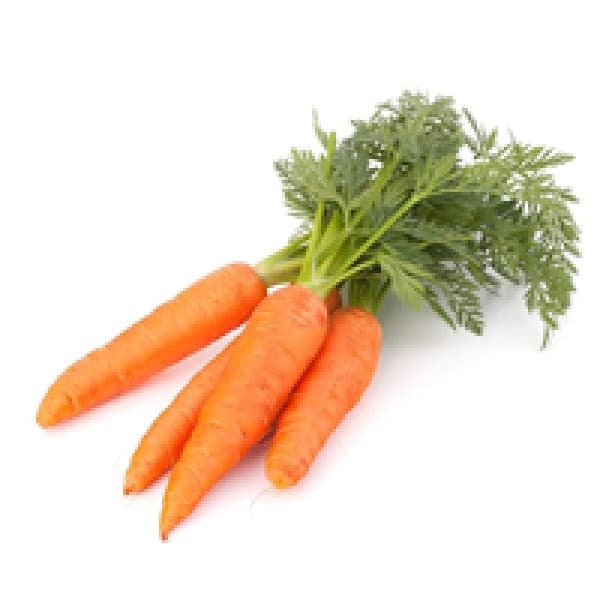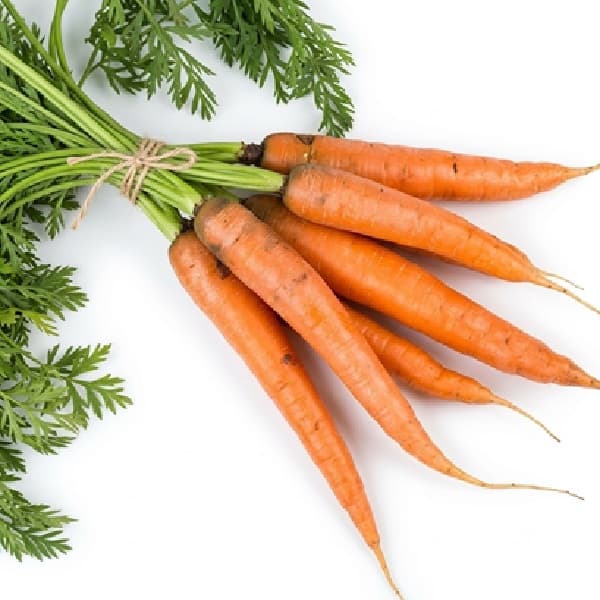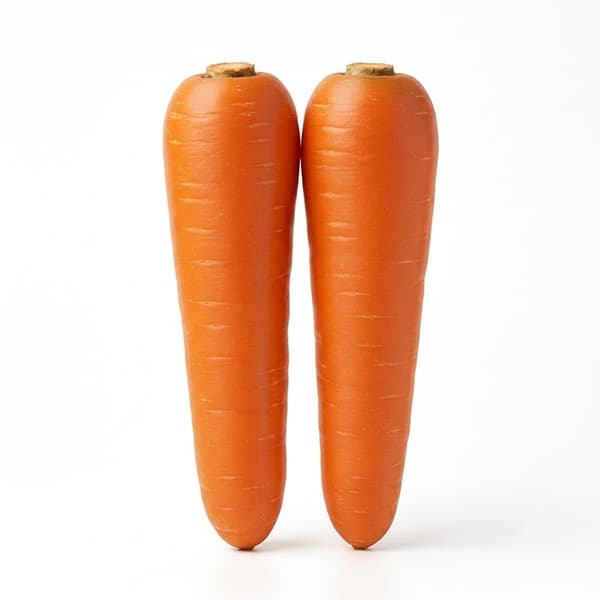

Da Lat Baby Orange Carrots (Daucus carota subsp. sativus) belong to the family Apiaceae. They are small-sized baby carrots cultivated in the Da Lat area of Lam Dong Province. The roots are generally short and elongated, small cylindrical, or slightly conical depending on the variety and harvesting stage. They have a bright to deep orange color, a relatively smooth surface, firm and juicy flesh, and natural crispness. Baby carrots have a mild, fresh sweetness and a characteristic fresh-carrot aroma.
Characteristic Features
The roots are small in size and generally short, elongated, cylindrical, or slightly conical depending on the variety and harvesting stage. They are typically bright to deep orange, with a relatively smooth surface and may have small natural lateral roots.
The flesh is evenly orange, firm, juicy, and relatively crisp when fresh. Due to their small size, the core is generally not large, with relatively uniform color and structure.
Acceptable raw material should be fresh and relatively intact, without bruising, cracking, excessive softness, leakage, or signs of decay. The surface should be free from mold, abnormal disease spots, or pest damage.
The carrots should be clean and free from insects and abnormal foreign matter. They should not have sour, fermented, musty, rotten, or other abnormal odors.
Flavor & Texture
Da Lat baby orange carrots have a mild, fresh carrot aroma with a delicate natural sweetness and refreshing flavor, with relatively low pungency when fresh.
The roots are firm, crisp, and juicy. Due to their small size, baby carrots soften relatively quickly when boiled, steamed, or cooked, while retaining slight crispness when heat-treated for an appropriate time.
Good-quality raw material should not have bitter or sour flavors or abnormal musty, fermented, or rotten odors. The roots should not be slimy, mushy, or excessively fibrous.
Uses & Applications
Used as an ingredient in boiled, steamed, stir-fried, roasted, stewed, and soup dishes.
They can be used whole or cut into slices, halves, or pieces depending on preparation requirements. Their small size makes them suitable for dishes where the natural shape and orange color of the carrots are retained.
They can also be used in salads, mixed vegetable dishes, and preparations requiring natural orange color and mild sweetness.
Nutritionally, carrots provide beta-carotene, dietary fiber, vitamin K1, vitamin C, potassium, and other antioxidants. Beta-carotene can be converted by the body into vitamin A. Nutritional value may vary depending on variety, freshness, and cooking method.