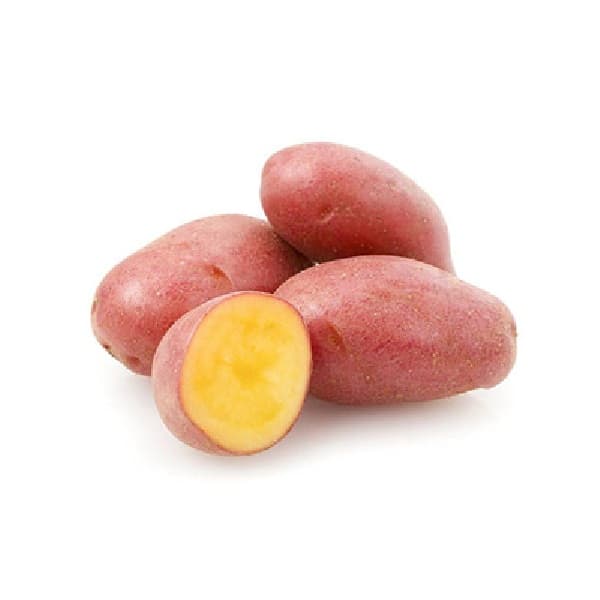
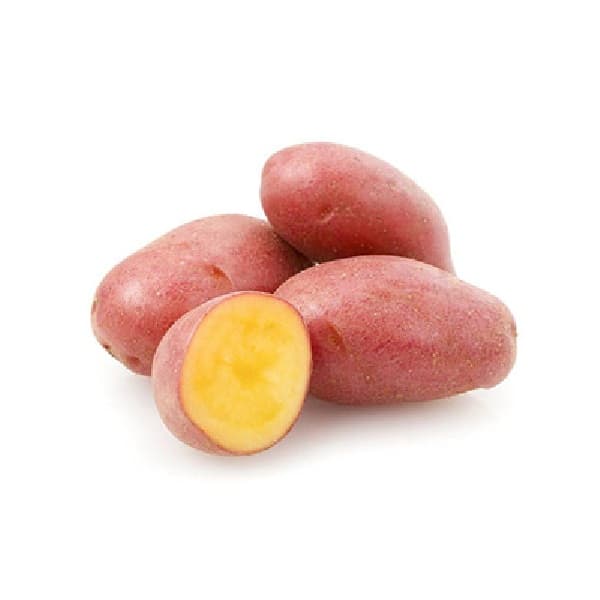
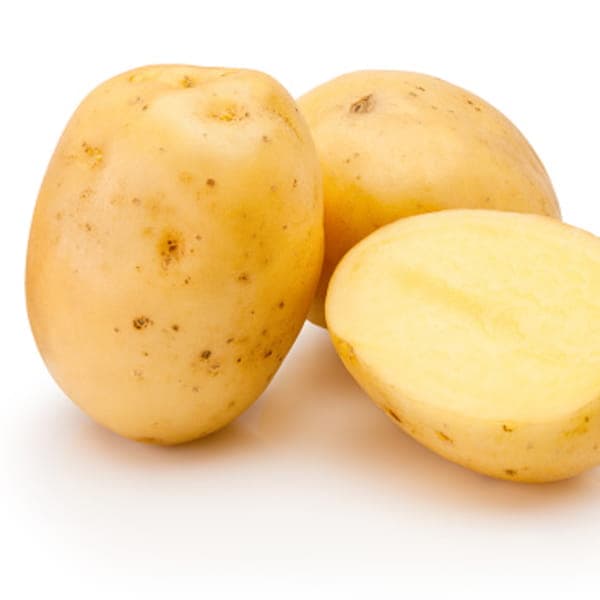
Chinese Yellow Potatoes have the scientific name Solanum tuberosum and belong to the Solanaceae family. They are potatoes produced in China and commonly cultivated in regions with cool climates. The tubers are harvested when fully developed and typically have round, oval, or slightly elongated shapes, with yellow-brown to pale-yellow skin and cream-yellow to pale-yellow flesh.
Characteristic Features
The tubers range from small to medium or large in size depending on the grading classification. They may be round, oval, elongated, or slightly irregular in shape. The surface is relatively smooth, with small eyes distributed across the tuber. The tubers should be firm and naturally dense for their size.
The skin ranges from yellow-brown and pale yellow to earthy yellow. It is relatively thin and may have natural soil residue after harvesting. The flesh is cream-yellow to pale yellow, relatively uniform in color, firm, and naturally moist.
Acceptable raw material should be fresh and firm, with no softening, severe bruising, excessive sprouting, abnormal green areas, decay, mold, or foreign odors. The tubers should be reasonably clean and free from significant insect damage or severe surface defects.
Flavor & Texture
The potatoes have a mild characteristic potato aroma with a naturally nutty and slightly sweet flavor. The raw flesh is firm and crisp, while cooked potatoes become soft and moderately mealy, with a smooth texture and characteristic potato flavor.
Uses and Applications
Yellow potatoes can be boiled, steamed, fried, stir-fried, baked, mashed, or used in stewed dishes.
The tubers can be peeled and cut into slices, cubes, or other shapes, or mashed for use in prepared dishes and potato-based food products.
Nutritionally, potatoes provide carbohydrates, dietary fiber, vitamin C, vitamin B6, potassium, and other minerals.