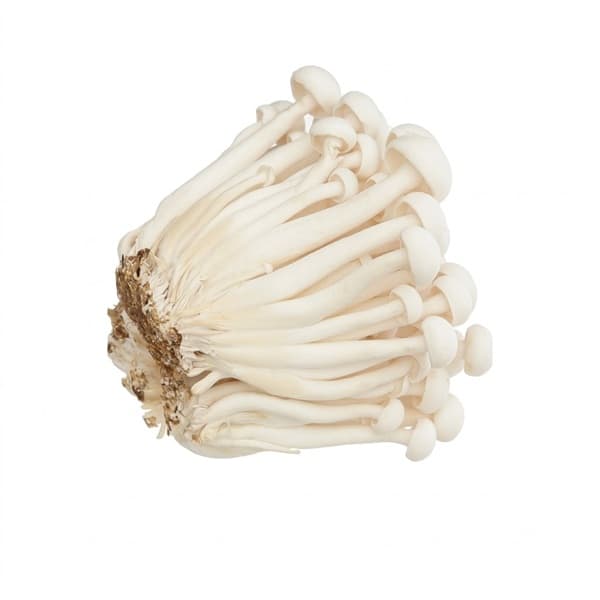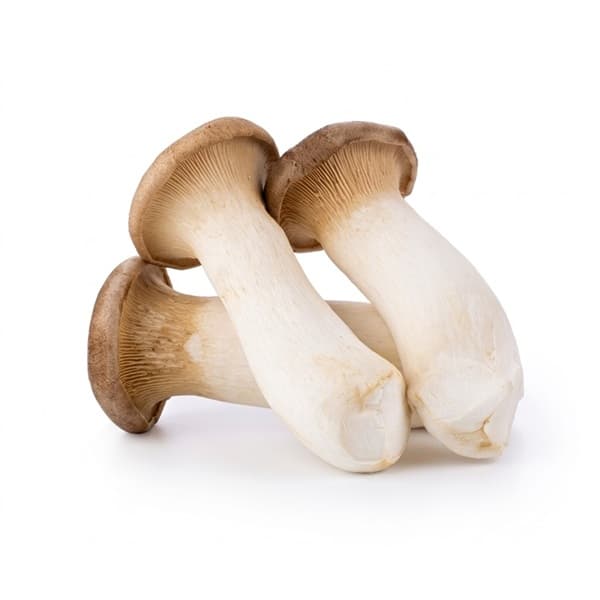
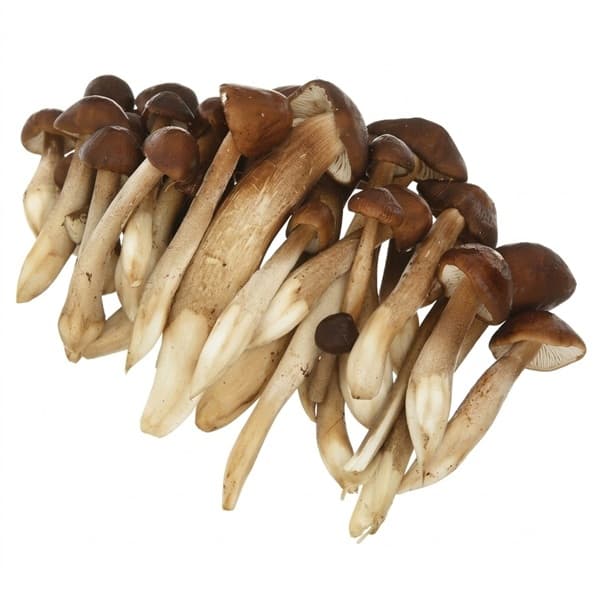
Black Termite Mushroom is an edible mushroom with a color ranging from grayish brown to dark brown or black. It is commonly cultivated on organic substrates and has a shape somewhat similar to naturally occurring termite mushrooms. The mushroom has firm stems, round or slightly flattened caps, and a smooth surface, and often grows in clusters. It has a mild aroma, natural sweetness, and a crisp, slightly chewy texture, making it suitable for a variety of cooking methods.
Distinctive Characteristics
The cap ranges from grayish brown to dark brown or black, with a round or slightly flattened shape when mature.
The cap surface is relatively smooth, with edges that may be slightly curved. The center of the cap is often darker in color.
The stem ranges from white to off-white, firm, relatively long, and elastic.
The mushrooms commonly grow in clusters or groups, with relatively uniform sizes.
Good-quality fresh mushrooms have intact caps, firm stems, naturally dry surfaces, and no signs of sliminess, bruising, abnormal darkening, or mold.
Flavor & Texture
Black Termite Mushroom has a mild aroma, delicate natural sweetness, and natural umami. The flesh is firm, crisp, and slightly chewy, while the stems retain good elasticity during cooking. When cooked, the mushroom becomes softer while maintaining a relatively firm texture and readily absorbing the flavors of seasonings and broths.
Uses & Applications
Stir-frying: combined with garlic, vegetables, meat, seafood, or other mushrooms.
Hot pot: used with meat, seafood, tofu, and various vegetables.
Soups & broths: adds natural umami and texture to dishes.
Grilling & pan-searing: helps retain the mushroom's firmness and characteristic aroma.
Braising & stewing: combined with meat, vegetables, or other ingredients.
Vegetarian dishes: combined with tofu, vegetables, and other mushrooms to create a variety of flavors and textures.
Rolls & mixed dishes: can be prepared by stir-frying or pan-searing before being combined with other ingredients.
Nutritionally, Black Termite Mushroom provides dietary fiber, protein, B vitamins, potassium, phosphorus, and various minerals and naturally occurring bioactive compounds. Nutritional composition may vary depending on the variety, substrate, growing conditions, maturity, and storage conditions.