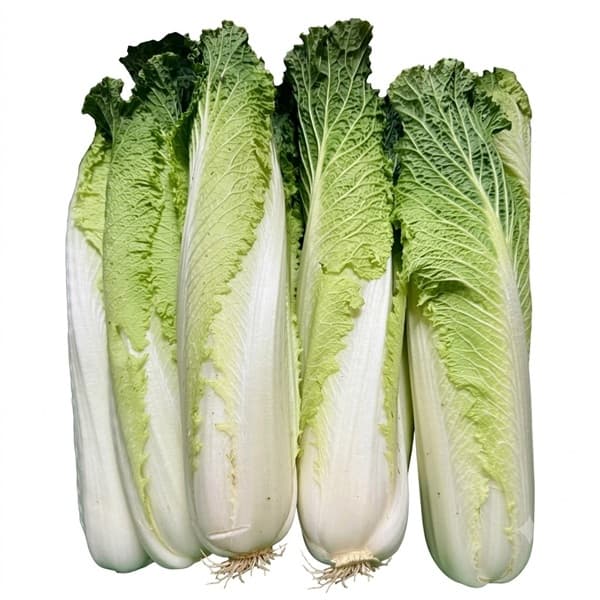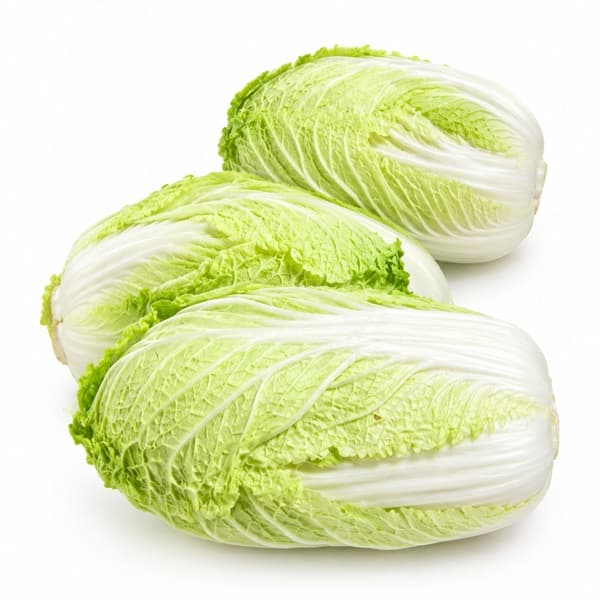
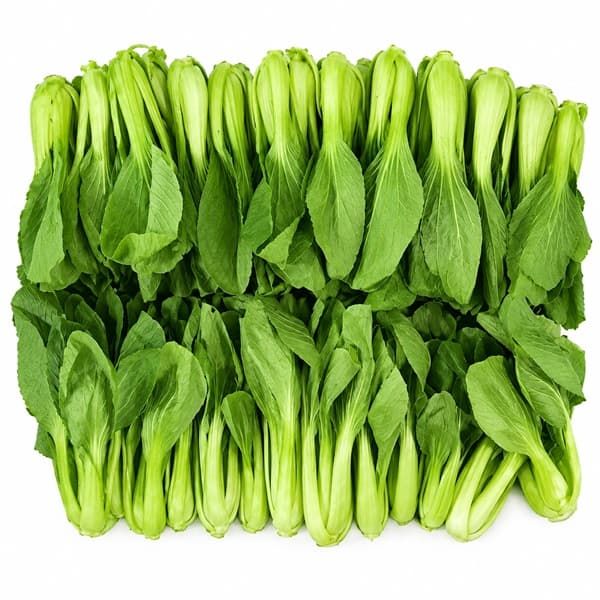
Bok choy (also known as pak choi) is a vegetable belonging to the Brassicaceae family, native to China and East Asia. It is currently widely cultivated in various vegetable-growing regions across Vietnam, particularly in areas with cool climates and suitable soil conditions—such as Da Lat (Lam Dong)—and other specialized vegetable farming zones.
Key Characteristics
Bok choy has a compact shape featuring succulent, crisp stalks that are white or pale green, and soft green leaves with a naturally mild, sweet flavor. The vegetable has a firm texture with minimal fiber, retaining its crispness and appealing color during cooking.
It has a relatively short growing cycle and is versatile in the kitchen. Harvested at the optimal size and stage of maturity, it ensures freshness, crispness, and high quality for consumption.
Uses and Applications
Bok choy is a popular ingredient in Asian cuisine and F&B menus. Both the leaves and stalks are edible, making it suitable for a wide range of dishes, such as:
Stir-fries: sautéed with garlic, mushrooms, meat, or seafood.
Boiled or steamed: methods that preserve the vegetable's natural sweetness and crisp texture.
Soups: adding a light, refreshing flavor and a serving of greens to the dish.
Noodle dishes (including *pho*) and hotpots: served as a side vegetable or a key ingredient.
Vegetarian dishes: combined with mushrooms, tofu, and other vegetables.
Boiled or steamed: methods that preserve the vegetable's natural sweetness and crisp texture.
Soups: adding a light, refreshing flavor and a serving of greens to the dish.
Noodle dishes (including *pho*) and hotpots: served as a side vegetable or a key ingredient.
Vegetarian dishes: combined with mushrooms, tofu, and other vegetables.
Bok choy is rich in fiber, vitamins, and minerals while being low in calories, making it an excellent choice for adding greens to a balanced diet.