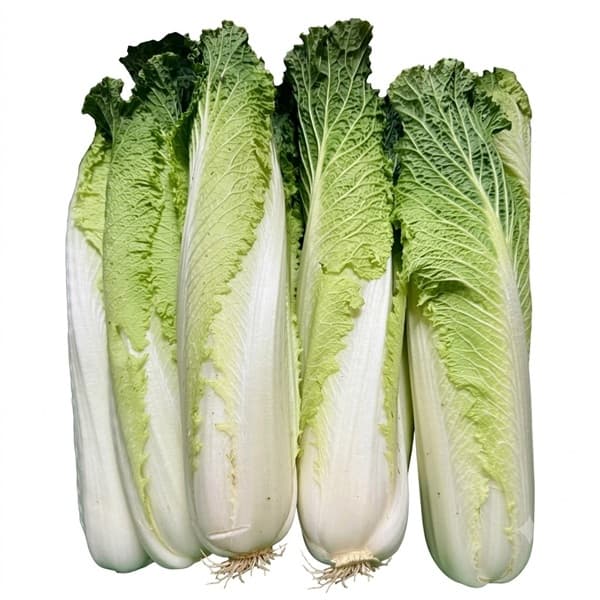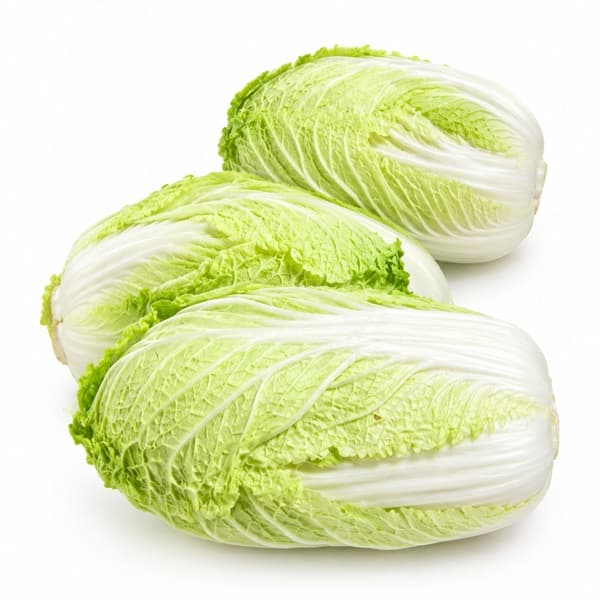

Heart-shaped cabbage is a variety characterized by an elongated head and a pointed tip, creating a shape resembling a heart. Belonging to the *Brassicaceae* family, it features leaves tightly packed into a head. It is currently cultivated in many vegetable-growing regions across Vietnam.
**Key Characteristics**
Heart-shaped cabbage features an elongated head that is slightly pointed at the top and broader at the base, creating its distinctive shape. The leaves are arranged relatively tightly around the core; the outer leaves typically range from pale to medium green, while the inner leaves are lighter in color.
The leaves are thinner than those of some round cabbage varieties, with distinct veins that are not overly tough. High-quality heads are symmetrical and feel firm and heavy for their size, with fresh leaves free from bruising, waterlogging, or signs of spoilage.
**Flavor & Texture**
Heart-shaped cabbage has a mild, sweet flavor with little pungency, making it suitable for various cooking methods. The leaves are crisp and succulent when eaten raw; when cooked, they soften quickly yet retain a certain firmness.
Compared to varieties with thick leaves, heart-shaped cabbage leaves are relatively tender and easy to prepare, and they absorb seasonings well during stir-frying or boiling.
**Uses & Applications**
Heart-shaped cabbage can be used in a wide range of dishes:
Stir-fried with beef, pork, chicken, shrimp, or mushrooms.
Boiled, steamed, or blanched as a vegetable side dish.
Used in broths, soups, and hotpots.
Used in salads, coleslaw, and mixed vegetable dishes.
Used as an ingredient for wraps, *bánh mì*, sandwiches, and burgers.
Incorporated into noodle dishes, pasta, and mixed vegetable medleys. Suitable for use in vegetarian menus, home kitchens, restaurants, and industrial catering.
Heart-shaped cabbage provides fiber, vitamins, minerals, and natural plant compounds, making it an excellent vegetable addition to a wide range of menus.