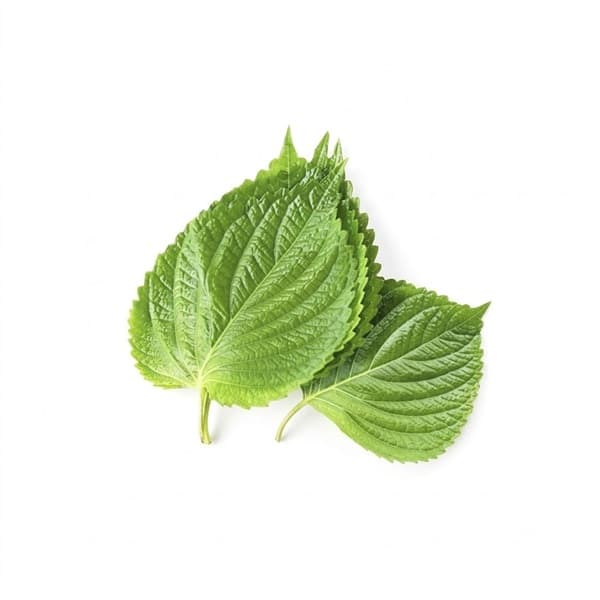
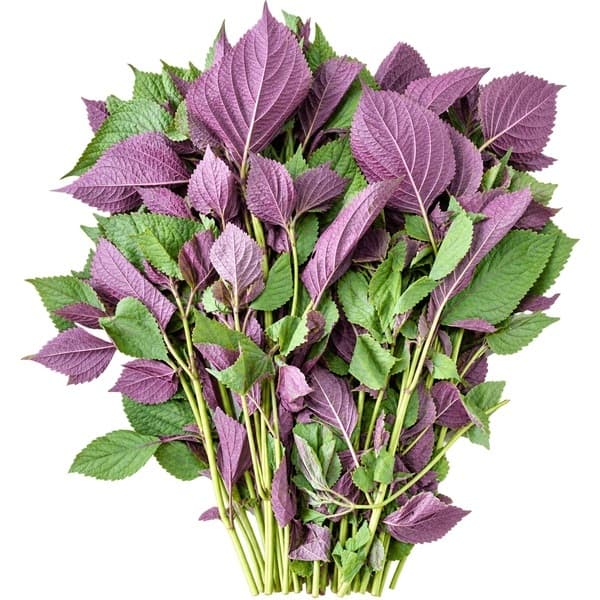
Perilla Leaves are aromatic herbs belonging to the Perilla genus in the Lamiaceae family. They originated in East Asia and are widely cultivated and used in Vietnam, Korea, Japan, and other Asian countries. The leaves are ovate, rounded, or slightly heart-shaped, with serrated edges and colors ranging from green to greenish-purple depending on the variety. Perilla Leaves have a distinctive aroma, mild spiciness, and are commonly used as a culinary herb.
Distinctive Characteristics
The leaves are ovate, rounded, or slightly heart-shaped, with size varying depending on the variety and growing conditions.
The leaf margins have distinct serrations, with prominent veins and fine natural hairs on the surface.
The upper surface is generally green, while the underside may be greenish-purple, reddish-purple, or green depending on the variety.
The stems are soft and highly branched, with relatively long leaf stalks firmly attached to the leaf blades.
Good-quality leaves are fresh, naturally colored, intact, and free from signs of yellowing, bruising, pest damage, or mold.
Leaf size, color, and aroma intensity may vary depending on the variety, growing conditions, and maturity.
Flavor & Texture
Perilla Leaves have a distinctive aromatic profile with mild spiciness, a slightly pungent character, and herbal aftertaste. Young leaves are soft, tender, and juicy, while mature leaves are slightly thicker, firmer, and more aromatic. When cooked, the leaves become softer and their aroma may change depending on the cooking method.
Uses & Applications
Side dishes: served with noodles, pho, porridge, grilled meats, and various other dishes.
Wrapping: used to wrap meat, fish, seafood, vegetables, or other fillings.
Mixed dishes & salads: used whole or sliced and combined with vegetables and dressings.
Soups & porridge: used as an aromatic herb or ingredient in soups and porridge.
Frying & pan-searing: combined with meat, fish, or other ingredients for cooking.
Grilled dishes: used to wrap grilled meat and seafood or combined with other grilled ingredients.
Food decoration: used whole or sliced to add color and aroma to dishes.
Preparation: used whole, chopped, or thinly sliced depending on the intended application.
Nutritionally, Perilla Leaves provide dietary fiber, vitamin A, vitamin C, vitamin K, calcium, iron, and various natural plant compounds. Nutritional composition may vary depending on the variety, growing conditions, maturity, and storage conditions.