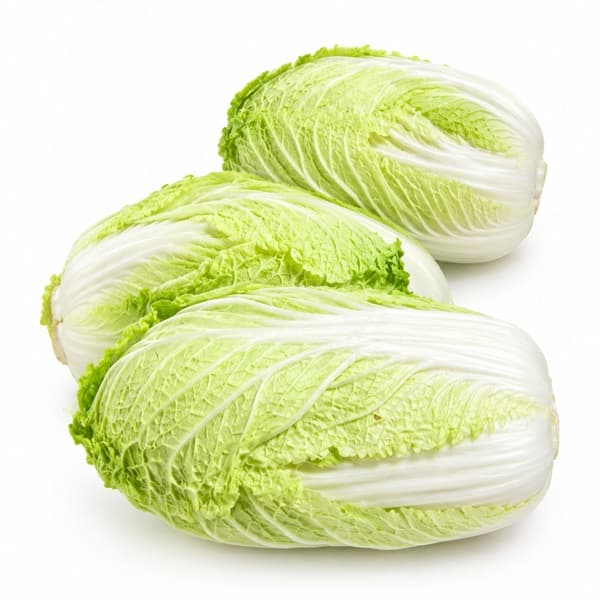
Napa cabbage (also known as Chinese cabbage) belongs to the *Brassicaceae* family and originates from China and East Asia. It is currently widely cultivated in Vietnam and other major vegetable-growing regions.
**Key Characteristics**
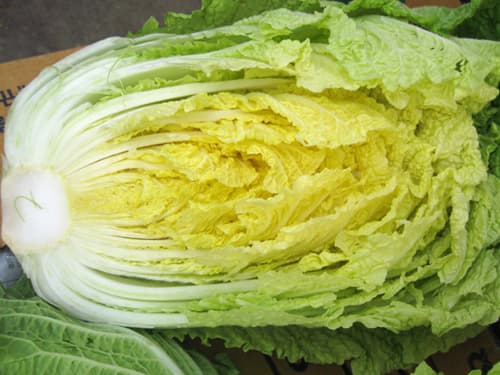
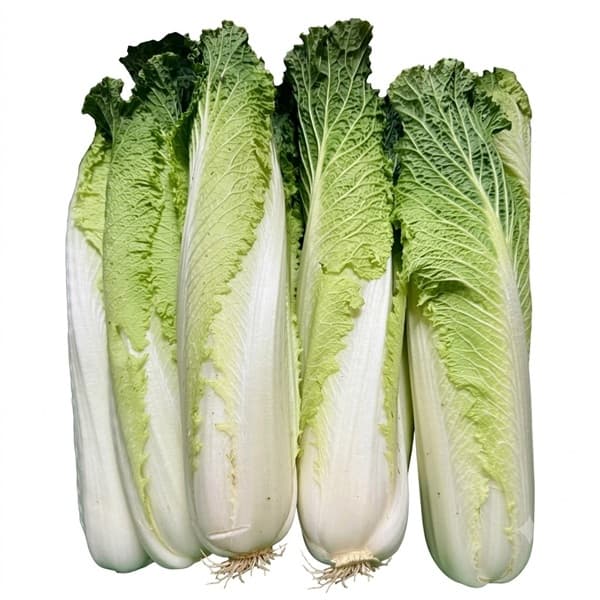
Napa cabbage forms an elongated head with tightly wrapped, overlapping leaves. The leaf stalks are greenish-white or ivory-white, while the leaf blades are pale green, becoming yellower and more tender toward the center.
The stalks are succulent and crisp, with a mild sweetness and very little bitterness. The inner core is softer and naturally sweet. When cooked, the cabbage retains its crisp texture while easily absorbing flavors.
Head size varies depending on the variety and cultivation conditions. High-quality Napa cabbage features a firm head, intact leaves, and natural coloring, free from bruising, water-logging, or signs of spoilage.
**Uses and Applications**
Napa cabbage is a staple ingredient in Asian cuisine, widely used in restaurants, eateries, commercial kitchens, and various food service operations. Common applications include:
* **Hotpot:** The crisp, succulent stalks provide a refreshing sweetness.
* **Stir-frying:** Pairs well with meat, seafood, mushrooms, or other vegetables.
* **Soups and broths:** Adds a mild sweetness and incorporates greens into the dish.
* **Pickling and Kimchi:** A popular ingredient for fermented vegetable dishes, especially Korean kimchi.
* **Wraps:** The leaves serve as wrappers for meat, mushrooms, seafood, or steamed dishes.
* **Vegetarian dishes:** Combines well with mushrooms, tofu, and other vegetables.
Napa cabbage contains fiber, vitamins, and minerals while being relatively low in calories, making it an excellent choice for adding greens to a daily diet.