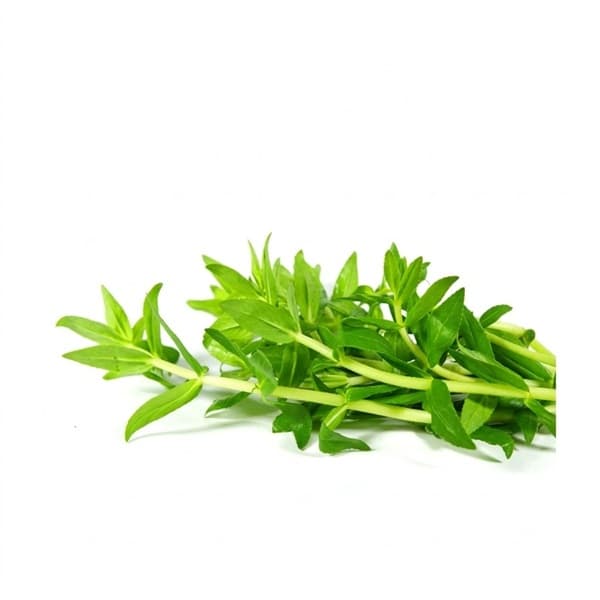

Vietnamese Coriander is an aromatic herb belonging to the Polygonaceae family, scientifically known as Persicaria odorata. It originates from Southeast Asia and is widely cultivated and used in Vietnam and other tropical countries. The plant has soft stems, elongated green leaves, and a distinctive aromatic fragrance.
Distinctive Characteristics
-
Leaves are elongated with pointed tips, relatively smooth surfaces, and a characteristic green color.
-
Stems are soft, segmented, and capable of forming low-growing clusters.
-
Leaves have prominent midribs and may occasionally show darker or reddish-brown markings depending on the plant and growing conditions.
-
When fresh, the leaves and stems are soft, succulent, and highly aromatic.
-
Both the leaves and young stems can be used depending on the preparation method.
Flavor & Texture
Vietnamese Coriander has a distinctive aroma with a mildly spicy, slightly pungent, and subtly astringent flavor that adds a fresh and pronounced taste to dishes. The leaves are soft and succulent, while the young stems have a slightly crisp texture. Its aroma is particularly noticeable when used fresh and becomes milder when cooked.
Uses & Applications
Vietnamese Coriander is commonly used fresh as an aromatic herb served alongside dishes.
It can be added to salads, mixed salads, and other fresh preparations to enhance aroma and flavor.
It is often combined with eggs, meat, fish, seafood, and vegetables in a variety of dishes.
The leaves can be finely sliced or used whole depending on the preparation.
It can be served as a fresh herb alongside soups, boiled dishes, and strongly seasoned foods.
Vietnamese Coriander can also be used to add aroma and provide a natural garnish for dishes.
Nutritionally, Vietnamese Coriander provides dietary fiber, vitamin A, vitamin C, some B vitamins, and minerals such as calcium, iron, and potassium. It also contains naturally occurring plant compounds and essential oils that contribute to its characteristic aroma. Nutritional composition may vary depending on variety, growing conditions, maturity, and storage methods.